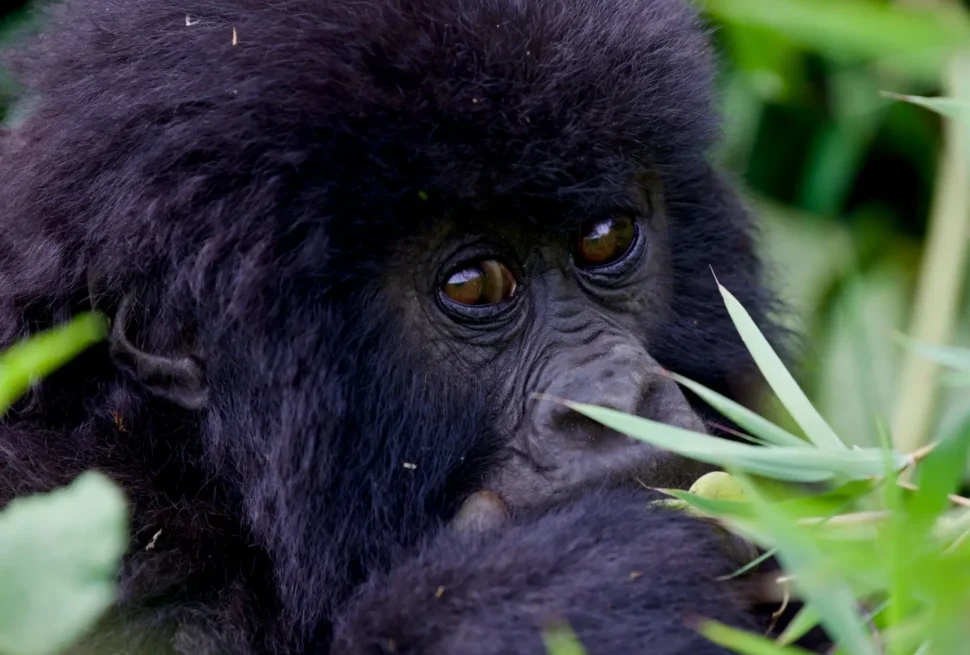
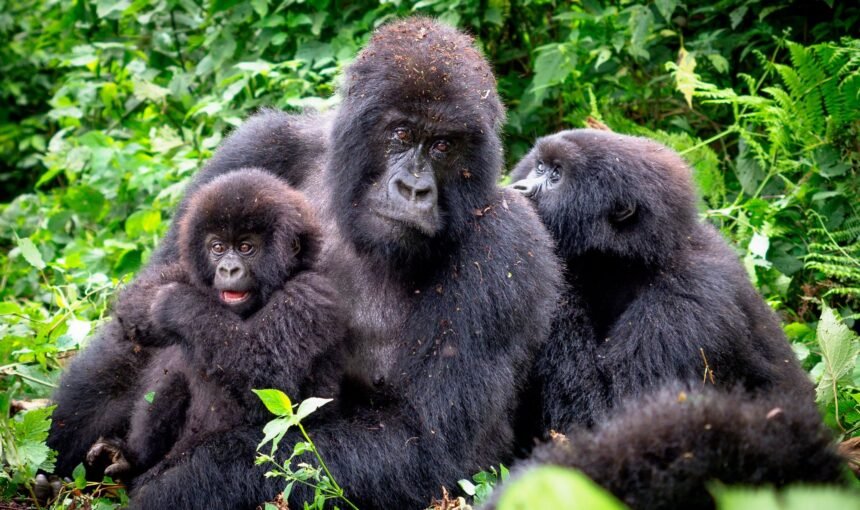
A gorilla family can look quiet at first: a silverback resting in the shade, females feeding nearby, babies tumbling over roots like unsteady acrobats. Watch longer, and the scene becomes far more complex. Every grunt, glance, posture, and playful shove helps hold the group together.
Gorillas are the largest living primates, yet their family life is often gentle, patient, and deeply social. Their groups are not random gatherings. They are structured communities shaped by protection, parenting, feeding, travel, and trust.
Scientists often call these groups “troops” or “bands.” A typical gorilla family may include one dominant silverback, several adult females, their infants, juveniles, and sometimes younger or subordinate males. The exact makeup depends on the species, habitat, and history of the group.
Understanding these families matters for more than curiosity. Conservation groups and field researchers use knowledge of gorilla behavior to protect habitats, reduce human-wildlife conflict, and support careful ecotourism. When people understand gorillas as family-centered animals, it becomes harder to see them as distant symbols and easier to see what is at stake.
Gorilla families are built around trust and protection
Gorilla social structure varies across species and regions, but most families share a few core features. The group usually centers on a mature male, the silverback, and several adult females with their offspring.
A silverback gets his name from the pale gray or silver hair that develops across his back as he matures, usually around 12 years of age. He is not just the largest body in the group. He is also the main decision-maker, protector, and conflict manager.
Adult females are the steady core of the family. They choose where to live, whom to mate with, and whether to stay in a group or transfer to another. Their choices shape group stability over time.
Babies and juveniles bring constant movement. Young gorillas wrestle, climb, chase, and test social rules through play. These early interactions teach them how to read body language, respect limits, and form bonds.
There are two gorilla species, eastern gorillas and western gorillas, with four commonly recognized subspecies. Their family patterns differ. Mountain gorillas, a subspecies of eastern gorilla, sometimes live in larger groups with more than one adult male. Western lowland gorillas more often live in smaller groups led by one silverback, though variation exists.
That flexibility is one reason gorillas have survived in forests, mountains, swamps, and lowland habitats. Their family system adapts to food availability, threats, and social opportunity.
The silverback leads without constant force
The silverback is the most visible figure in many gorilla families, but his leadership is often calmer than people expect. He does not rule by fighting every day. Much of his authority comes from experience, size, confidence, and the trust of the group.
He makes many daily decisions, including when the group moves, where it feeds, and where it rests. Researchers who track gorillas often see families follow the silverback’s lead during travel. If he rises and starts walking, others usually follow.
His most dramatic role is defense. A silverback may stand between his group and a threat, whether that threat is a rival male, a leopard, or a human who has come too close. Displays can include chest beating, charging, tearing vegetation, hooting, or standing upright.
These displays are often warnings rather than attempts to injure. A chest beat sounds impressive, and it carries information. Research has shown that the sound can signal a male’s body size, which may help rivals assess whether a fight is worth the risk.
A strong silverback also helps protect infants. In groups with an established male, babies are less vulnerable to outside males. This matters because in some primate species, new males may kill unrelated infants. Gorilla social life is not free of violence, but a stable silverback can reduce danger for the youngest group members.
He also plays a quieter role as a social anchor. Adult females often maintain bonds with the silverback, and infants may climb on him, sit near him, or play around him. A tolerant silverback can become a kind of safe island in the middle of family life.
Interesting fact: Silverbacks do not usually sleep in the same nest each night. Like other gorillas, they build fresh nests from branches, leaves, and vegetation, often on the ground.
Females shape the family from the inside
Adult female gorillas do far more than raise infants. They influence where families form, how long groups last, and which males gain or keep social power.
A female usually gives birth to one infant at a time after a gestation period of about eight and a half months. Twins are rare. Because gorilla infants depend on their mothers for years, births are spaced far apart, often several years between surviving offspring.
This slow reproductive pace has major conservation implications. Gorilla populations cannot rebound quickly after poaching, disease outbreaks, or habitat loss. Protecting adult females is especially important because each mother may raise only a small number of infants over her lifetime.
Females often feed near one another, rest near the silverback, and keep track of their infants while foraging. Gorillas are mostly herbivorous, eating leaves, stems, shoots, fruit, bark, and other plant material depending on habitat and season. Mountain gorillas eat many leafy plants because fruit is less available in their high-elevation forests. Western lowland gorillas often eat more fruit when it is in season.
Female relationships can be subtle. Compared with chimpanzees, gorillas tend to show less frequent social grooming, but that does not mean they lack bonds. Proximity, shared resting areas, calm feeding, and coordinated movement all matter.
Females may also leave one group for another. This can help avoid inbreeding and may give a female better protection or social conditions. A female’s decision to stay with a silverback depends on many factors, including his ability to defend the group, his tolerance toward infants, and the presence of other females.
Babies learn family life through touch, play, and imitation
A newborn gorilla weighs only a small fraction of an adult’s size and depends completely on its mother. In the first months, the infant clings to her body as she moves, feeds, and rests. The mother provides milk, warmth, transport, and protection.
As the baby grows stronger, it begins to explore. First it reaches, rolls, and crawls near the mother. Later it climbs, wrestles with siblings, and plays near juveniles. Play is not wasted energy. It builds strength, coordination, and social skill.
Young gorillas learn by watching. They observe what adults eat, how they strip leaves, which stems are worth chewing, and how to respond to the silverback’s signals. Like human children, young gorillas mix curiosity with caution.
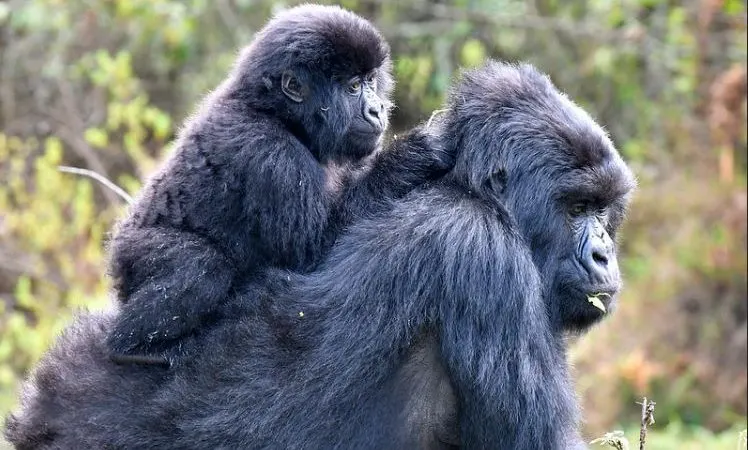
A baby may climb over its mother while she feeds, pull at her hair, or try to take food from her hands. Mothers often show patience, but they also set limits. If an infant strays too far or becomes too rough, the mother may retrieve it, block it, or shift away.
Older juveniles help create a lively nursery atmosphere. They chase, tumble, and wrestle in short bursts, then collapse near adults. These games teach restraint. A young gorilla that bites too hard or ignores another’s protest learns from the reaction.
The silverback may seem detached during play, but his presence affects the mood of the whole group. Young gorillas often play close to him because his position offers safety. Some silverbacks even tolerate infants climbing onto their backs or tugging at them.
Gorilla communication is rich, quiet, and physical
Gorillas do not need constant noise to communicate. Much of their family life runs on small signals.
They use vocal sounds, facial expressions, posture, touch, and movement. Researchers have described a wide range of gorilla calls, from soft grunts during feeding to sharper alarm barks. One well-known sound is the low, rumbling “belch vocalization,” often heard during relaxed feeding or social contact. It helps group members stay connected without creating alarm.
Common communication methods include:
- Soft grunts and rumbles These keep the group in contact during feeding or movement.
- Chest beating This can signal size, strength, excitement, or warning, especially in adult males.
- Facial expressions Open-mouth play faces, tight lips, stares, and relaxed faces all carry meaning.
- Body posture A stiff stance can warn others. A relaxed seated posture signals calm.
- Touch and proximity Infants cling, juveniles wrestle, and adults sit close when social tension is low.
Gorillas also show self-control in conflict. Many disputes end with displays, avoidance, or reassurance rather than serious injury. A silverback may intervene by positioning himself between individuals or giving a signal that stops the tension.
This does not make gorillas peaceful in a sentimental way. They are powerful wild animals with real competition and risk. But inside stable families, cooperation is often more useful than aggression.
Parenting is patient, protective, and shared by the group
Gorilla parenting centers on the mother, but the whole group shapes a youngster’s world.
Mothers nurse, carry, groom, comfort, and protect. They also make many small decisions that guide development. A mother chooses when to let an infant explore, when to pull it back, and where to rest while it plays nearby.
Silverbacks contribute through protection and tolerance. In many groups, the silverback is not a hands-on caregiver in the same way a mother is, but his role can be vital. He keeps the group together, responds to danger, and provides a stable social center.
Siblings and juveniles add another layer. Young gorillas often interact with infants through play, watching, and gentle contact. These relationships help babies gain confidence beyond the mother’s arms.
Alloparenting, care by individuals other than the mother, can occur in gorilla groups, though it varies. An older sibling or another female may show interest in an infant. Still, the mother remains the main caregiver, especially during the early years.
Gorilla childhood is long, which is one reason their behavior feels familiar to human observers. Infants nurse for years, juveniles play for years, and young males take a long time to reach full maturity. This long development gives them time to learn the rules of complex social life.
Daily life follows food, rest, and relationships
A gorilla family’s day is shaped by simple needs, repeated with social precision.
They often feed in the morning, rest around midday, feed again later, and build nests before night. The rhythm changes with weather, food availability, group size, and disturbance.
Food is central. Gorillas spend many hours eating because leaves and stems require volume. Their strong jaws and large digestive systems help them process fibrous plants. Fruit, when available, can influence movement because groups may travel to reach fruiting trees.
Rest periods are social time. Babies nurse. Juveniles play. Adults sit, groom occasionally, or doze. These quiet hours reveal much about relationships. Who sits near whom? Which infants approach the silverback? Which females keep close to each other?
Gorilla families also show memory and awareness of their home range. They revisit feeding areas, respond to seasonal growth, and avoid places associated with danger when possible. Their movements are not random wandering. They reflect knowledge built over time.
Interesting fact: Gorillas laugh-like vocalizations during play have been reported by primate researchers. These sounds are not the same as human laughter, but they show how play has its own emotional signals across great apes.
Conservation depends on protecting family units
Every gorilla family represents years of survival, learning, and reproduction. Losing one adult can affect many others, especially if that adult is a mother or a leading silverback.
All gorilla subspecies face conservation pressure. Threats include habitat loss, illegal hunting, snares set for other animals, disease, mining, and conflict linked to human land use. Great apes are also vulnerable to some human respiratory illnesses, which is why responsible gorilla tourism uses distance rules and health precautions.
Conservation successes show what protection can do. Mountain gorillas are often cited as a rare great ape conservation success because their numbers have increased from historic lows under intensive protection, veterinary support, community involvement, and carefully managed tourism. They remain endangered, so the work is far from finished.
Protecting gorillas means protecting forests and the people who live near them. Community-based conservation, anti-poaching patrols, habitat corridors, and disease prevention all support family stability in the wild.
For anyone interested in Inside Gorilla Families: Silverbacks, Mothers, and Babies Explained, the biggest lesson is that gorillas survive through relationships. Conservation must protect those relationships, not only individual animals.
Frequently asked questions
Do gorilla families always have one silverback?
No. Many groups have one dominant silverback, but some, especially mountain gorilla groups, may include more than one adult male. Even in multi-male groups, one silverback usually has the highest status.
Are silverbacks aggressive toward their own families?
Silverbacks can be forceful when defending the group or settling conflict, but they are often calm around familiar females and young. Infants may play near them, and some silverbacks show notable patience.
How long do baby gorillas stay with their mothers?
Young gorillas depend heavily on their mothers for several years. They nurse for a long period, begin exploring gradually, and continue learning social and feeding skills throughout childhood.
How do gorillas show affection?
Gorillas show social comfort through closeness, gentle touch, grooming, play, and relaxed resting near one another. Mothers also comfort infants by holding, carrying, and nursing them.
Why are gorilla births spaced so far apart?
Gorilla infants need long care. Because mothers invest years in feeding and protecting each baby, they do not give birth often. This slow reproduction makes population recovery difficult after losses.
The family is the key to understanding gorillas
Gorilla life is not built around constant drama. It is built around daily choices: where to feed, when to move, who stays close, how far a baby may wander, and when a silverback must stand his ground.
The silverback provides leadership and defense. Females shape the group through parenting, social choices, and long-term bonds. Babies bring learning, play, and the future of the family.
Seen this way, a gorilla group is not just a collection of animals in the forest. It is a living social system, held together by communication, memory, patience, and care. Protecting gorillas means protecting the families that teach each new generation how to survive.