If you are planning a gorilla trek in Bwindi Impenetrable Forest, there is a good chance you have checked the weather more than once. Then you see rain in the forecast and start wondering: Can you trek gorillas in Bwindi when it rains? Does rain stop gorilla trekking? And what happens if the forest gets wet while you are on the trail?
Having spent time on the trails of Bwindi, I would not let the possibility of rain put you off. Bwindi is a tropical rainforest, and rain is simply part of the environment. It can come suddenly, sometimes when the morning starts completely clear. The important thing is to arrive prepared.
In fact, some of my most memorable moments in Bwindi have been when the forest was wet. The vegetation looks different, the air feels cooler, and the forest becomes even quieter and more atmospheric.
Can You Go Gorilla Trekking in Bwindi When It Rains?
Yes. Gorilla trekking in Bwindi continues even when it rains. Rain does not normally mean that your trek will be cancelled.
Bwindi receives rainfall throughout the year because it is a rainforest, although some months are generally wetter than others. The weather can also change quickly because of the forest’s elevation and mountainous terrain.
What changes when it rains is the condition of the trail.
The soil can become muddy, roots and rocks can become slippery, and some sections of the trail may take more effort than they would in dry conditions. This is one reason I always recommend proper hiking boots rather than ordinary trainers.
The rain itself is usually not the biggest problem. Wet and slippery ground is what you need to prepare for.
What Is Bwindi Like During the Rainy Season?
The Bwindi rainy season can make trekking more demanding, but it does not necessarily make the experience worse.
After rain, the forest feels completely alive. Leaves become darker and glossier, water collects on vegetation, and the smell of wet earth becomes noticeable as you walk. You may also hear birds and other forest sounds more clearly between periods of rain.
The downside is that the trails can become muddy. A route that feels relatively straightforward when dry can require more concentration after a heavy shower.
Your walking pace may also be slower. That is perfectly normal. Gorilla trekking is not a race, and the guides will adjust the pace according to the group and the conditions on the trail.
Does Rain Make Gorilla Trekking Harder?
It can.
Bwindi gorilla trekking is already a hike through thick rainforest, and some trails involve steep climbs and descents. When it rains, the ground can become slippery, particularly on steep sections.
This is where good preparation makes a real difference.
Wear sturdy waterproof hiking boots with good grip. A lightweight rain jacket is essential, and waterproof trousers can be useful during heavier rain. I also recommend carrying a backpack rain cover and keeping anything you cannot afford to get wet inside waterproof bags.
If you find the terrain difficult, consider hiring a porter.
A porter can carry your backpack, but there is another benefit that is often overlooked. On difficult or muddy sections, they can give you a steady hand when you need it. Porters are local community members, so hiring one also provides direct income to people living around the forest.
What Should You Wear for Gorilla Trekking in the Rain?
Your clothing can make a huge difference to how comfortable you are on a wet gorilla trek.
For gorilla trekking in wet weather, I recommend:
- Sturdy waterproof hiking boots with good grip
- Long trousers
- A lightweight waterproof rain jacket
- Waterproof trousers if you have them
- Comfortable layers that dry reasonably quickly
- Hiking gloves to protect your hands from vegetation
- A hat or cap
- A backpack rain cover
- Waterproof bags for phones, documents and other valuables
Avoid relying on an umbrella. It is awkward to use when moving through thick vegetation and will not protect you very well on a forest trail.
The most important thing is to keep your feet comfortable and protect the items in your bag that need to stay dry.
What Happens If It Starts Raining During the Trek?
If rain starts while you are already in the forest, there is usually no reason to panic.
Your guide will assess the conditions and the group will continue at an appropriate pace. If the rain becomes particularly heavy, the group may pause briefly or take shelter where practical.
One thing you quickly learn in Bwindi is that the weather can change. A heavy shower can pass and be followed by much calmer conditions.
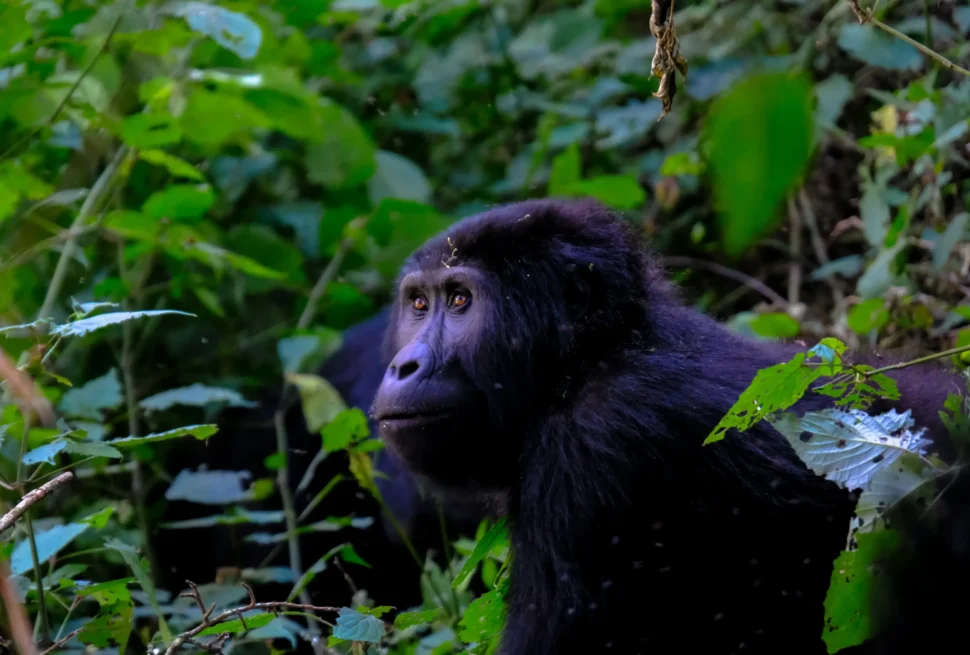
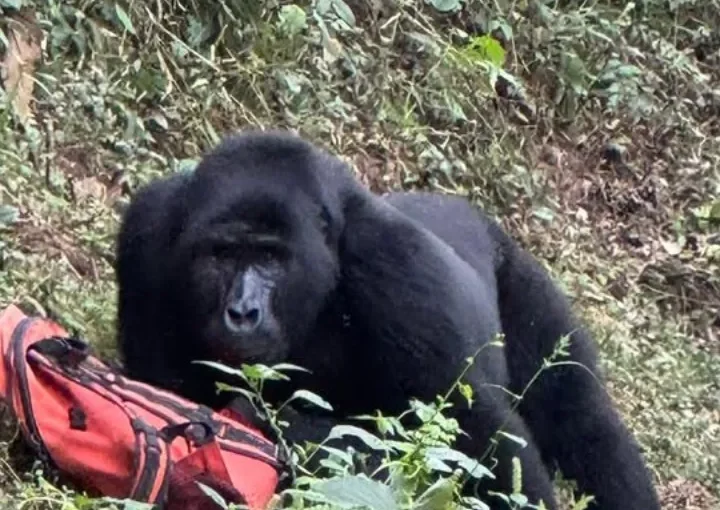
If you are already near the gorilla family, the experience can be quite different from what you might expect. You may find yourself watching gorillas moving through wet vegetation while rain falls around you. Photography becomes more challenging, but the setting can be remarkably atmospheric.
Just remember to protect your camera. A waterproof camera cover or a simple dry bag can save you a lot of trouble.
Can You Take Photos of Gorillas in the Rain?
Yes, but you need to be prepared for more difficult photography conditions.
Low light under the forest canopy can already make photography challenging. Rain can make it harder, particularly when the sky is overcast.
Keep your camera protected when you are walking and bring it out when you are ready to photograph. A small waterproof cover can be extremely useful.
Do not spend the entire trek worrying about getting the perfect photograph. The forest is dense, the light changes constantly and gorillas do not pose for cameras. Sometimes the best moments are the ones you simply experience rather than photograph.
Is the Rainy Season a Bad Time for Gorilla Trekking?
Not at all.
There is no single month when Bwindi guarantees perfect trekking weather. Even during traditionally drier periods, you can still encounter rain because this is a rainforest environment.
The advantage of travelling during the wetter months is that you may sometimes find the forest quieter, while the vegetation is particularly lush. However, trail conditions can be more challenging.
If your priority is having the easiest possible walking conditions, you may prefer one of the generally drier periods. If you are comfortable with some rain and come properly equipped, the wet season can still be an excellent time for gorilla trekking in Uganda.
Should You Hire a Porter for a Wet Gorilla Trek?
I strongly recommend considering it, particularly if you are not used to hiking on steep or muddy trails.
A porter can carry your daypack and provide assistance on difficult sections of the trail. You do not need to be an experienced hiker to enjoy Bwindi, but being realistic about your fitness and the conditions is important.
The porter system also has a direct community benefit. Many of the people working as porters live in communities surrounding Bwindi, and their income from tourism contributes to household livelihoods.
What If the Gorilla Trek Becomes Very Difficult?
Do not worry about keeping up with an artificial schedule.
The trekking time varies considerably because the gorillas move through their natural habitat. Your group may walk for a relatively short time or spend several hours searching before locating the gorilla family.
Your guide will monitor the trail, weather and condition of the group throughout the trek.
If you are visiting Bwindi for the first time, remember that the experience is about being in the forest, not simply reaching a destination as quickly as possible.
My Advice for Trekking Gorillas in Bwindi During Rain
If I had to give one piece of advice to someone preparing for a Bwindi gorilla trek, it would be simple: prepare for rain even if the forecast says it will be dry.
Bring proper boots, carry a rain jacket, protect your electronics and valuables, and do not underestimate muddy trails.
And do not be disappointed when the rain comes.
Bwindi is a rainforest. Rain is part of what makes the forest what it is. When you are standing beneath the canopy listening to the rain and watching a gorilla move quietly through the vegetation, you are experiencing the forest on its own terms.
That is part of what makes gorilla trekking in Bwindi so special.
Frequently Asked Questions
Can you trek gorillas in Bwindi when it rains?
Yes. Gorilla trekking continues during rain, and rain does not normally stop a scheduled trek. The main difference is that trails can become muddy and slippery.
Does rain make gorilla trekking harder?
Rain can make the trails more difficult because of mud, slippery rocks and steep sections. Good hiking boots, appropriate clothing and a porter can make the experience much easier.
What should I wear for gorilla trekking in the rain?
Wear sturdy waterproof hiking boots, long trousers and a waterproof rain jacket. Waterproof trousers, hiking gloves and a backpack rain cover are also useful.
Is the rainy season a bad time for gorilla trekking in Uganda?
No. The rainy season can make trails wetter, but gorilla trekking remains possible. The forest is particularly lush during wetter periods, and rain is a normal part of the Bwindi environment.
Do gorilla treks get cancelled because of rain?
Rain alone does not normally cancel a gorilla trek. Guides assess conditions on the ground and make decisions based on the safety of visitors and the trekking environment.
Can I take photos of gorillas when it is raining?
Yes, although photography can be more difficult because of rain, moisture and lower light under the forest canopy. Protect your camera with a waterproof cover and keep spare batteries and other equipment dry.
Do I need a porter for gorilla trekking in Bwindi?
A porter is not mandatory, but hiring one is worth considering, especially in wet conditions or if you are not accustomed to steep forest trails. Porters can also benefit communities around Bwindi through tourism income.