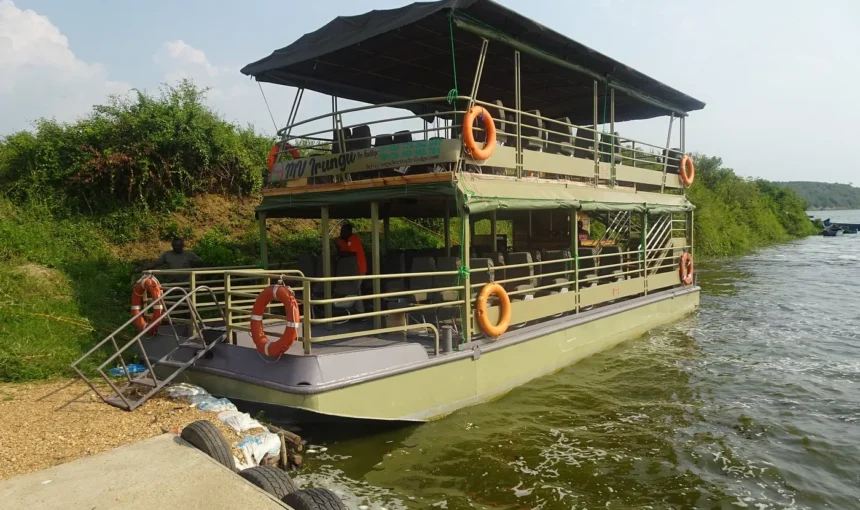
A boat safari on the Kazinga Channel puts wildlife at eye level. Instead of scanning a distant plain, the boat glides past hippos snorting in the water, elephants drinking at the bank, and fish eagles watching from bare branches.
The channel lies inside Queen Elizabeth National Park in western Uganda and links Lake George with Lake Edward. This natural waterway attracts animals throughout the year because it offers one of the park’s most reliable resources: water. That makes it one of the best places in Uganda to see a mix of large mammals, reptiles, and birds in a short, scenic trip.
Why the Kazinga Channel is such a rich wildlife corridor
The Kazinga Channel is not just a pretty stretch of water. It is a feeding, drinking, nesting, and resting place for many species. During dry periods, animals move toward dependable water sources, and the channel becomes a natural gathering point.
Uganda Wildlife Authority describes Queen Elizabeth National Park as one of Uganda’s most species-rich protected areas. The park is especially known for its birdlife, with hundreds of recorded species due to its mix of lakes, wetlands, savanna, crater areas, and woodland.
A boat safari works well here because many animals feel less threatened by boats than by vehicles. From the water, visitors often get calm, close views without disturbing natural behavior. Sightings change by season and time of day, but the channel often rewards patience.
Hippos are the stars of the channel
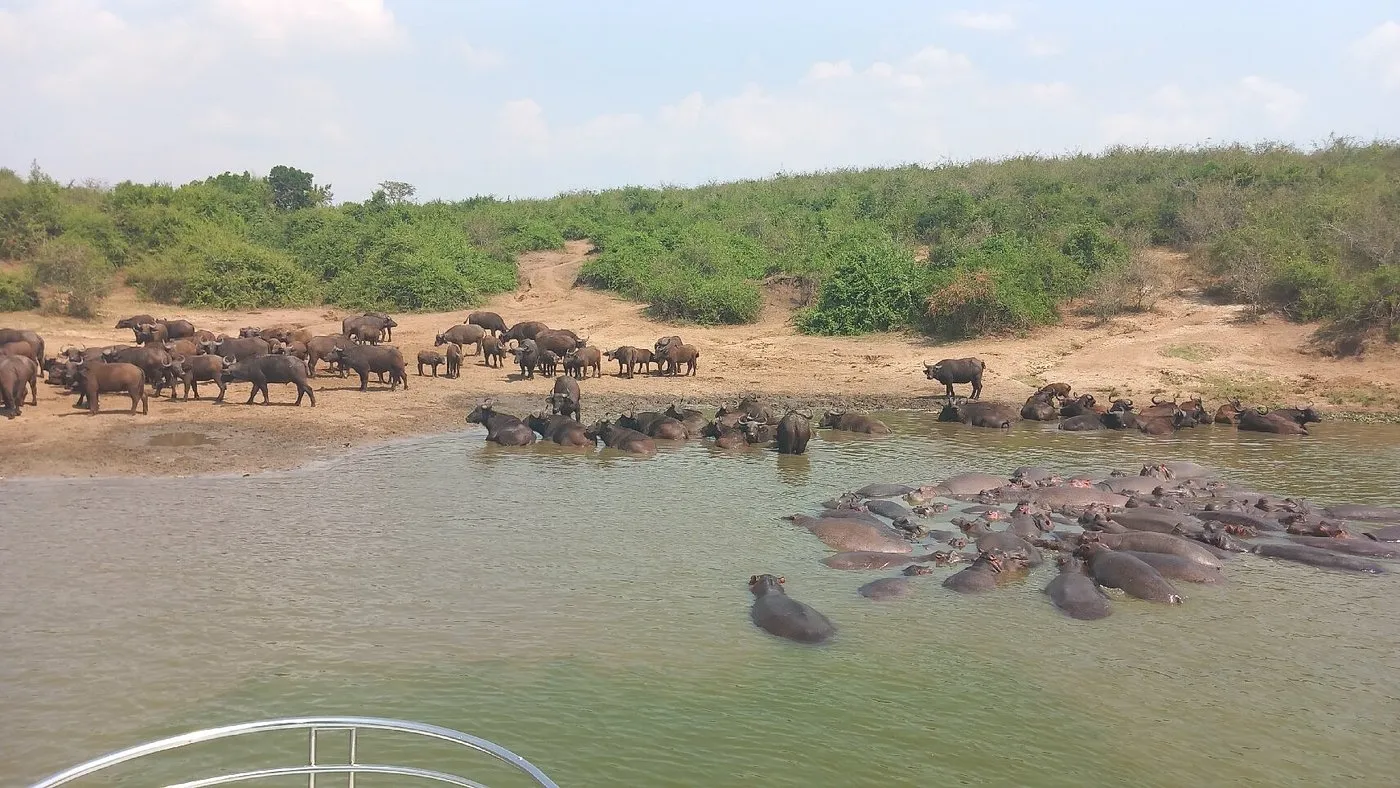
Hippos are the animals most closely associated with Kazinga Channel boat safaris. They spend much of the day submerged to protect their skin from the sun, then leave the water at night to graze.
On a typical boat ride, hippos may appear in large groups, with only their eyes, ears, and nostrils above the surface. They grunt, yawn, jostle, and occasionally open their mouths wide enough to show their enormous lower canines.
The best sightings are not always the loudest moments. Watch the edges of hippo pods for calves staying close to adults. Young hippos often rest near their mothers in shallow water, which makes for memorable but respectful viewing.
Photo tip: Use a zoom lens and keep the shutter speed fast enough to freeze sudden movement. A hippo can rise, splash, or yawn with little warning.
Elephants, buffalo, and crocodiles gather near the banks
The channel’s banks often bring larger mammals into view, especially in the warmer parts of the day when animals come down to drink.
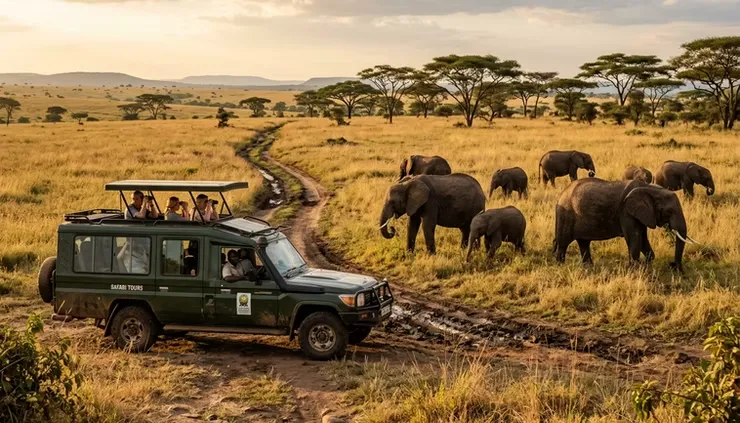
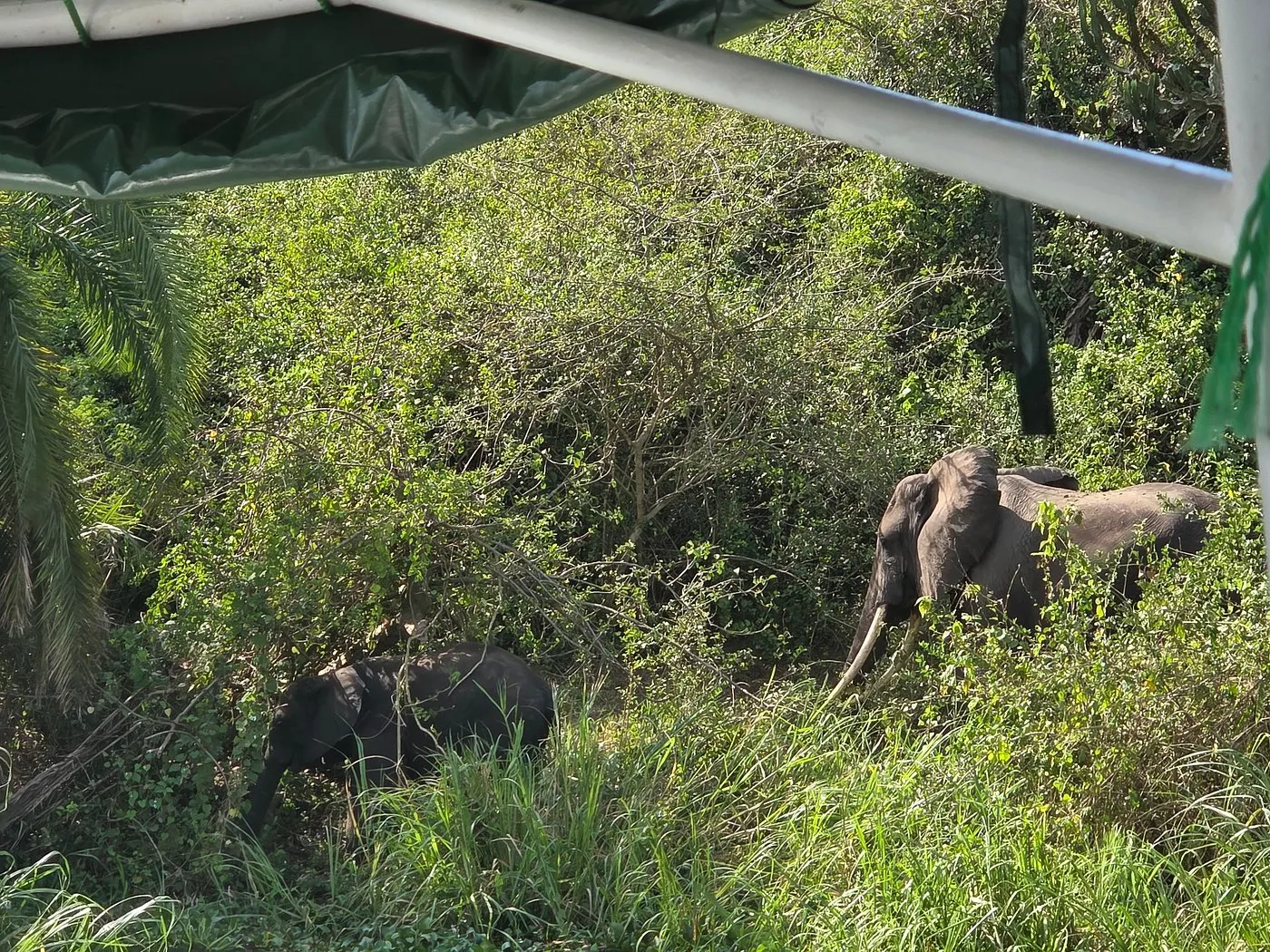
Elephants are among the most exciting sightings. A herd may walk slowly to the water, with adults surrounding younger calves. They drink by drawing water into their trunks, then spraying it into their mouths. Some linger to splash mud over their bodies, a behavior that helps cool them and protect their skin.
African buffalo also appear regularly near the shore. From the boat, their heavy horns and dark bodies stand out against the pale mud. They may drink in groups or rest half-hidden in grass close to the waterline.
Nile crocodiles can be harder to spot at first. Look for long, still shapes on sandbanks or just below the surface. Their patience is part of their hunting strategy, so they may remain motionless while birds and mammals move around them.
Other possible sightings include waterbuck, warthogs, monitor lizards, and antelope species. Predator sightings from the boat are less predictable, but the channel always feels alive because something is usually moving, calling, feeding, or watching.
Birdwatching can be just as thrilling as the mammals
Kazinga Channel is a standout destination for birders. Its mix of open water, mudflats, reeds, and nearby savanna creates habitat for many species in a compact area.
Common highlights may include:
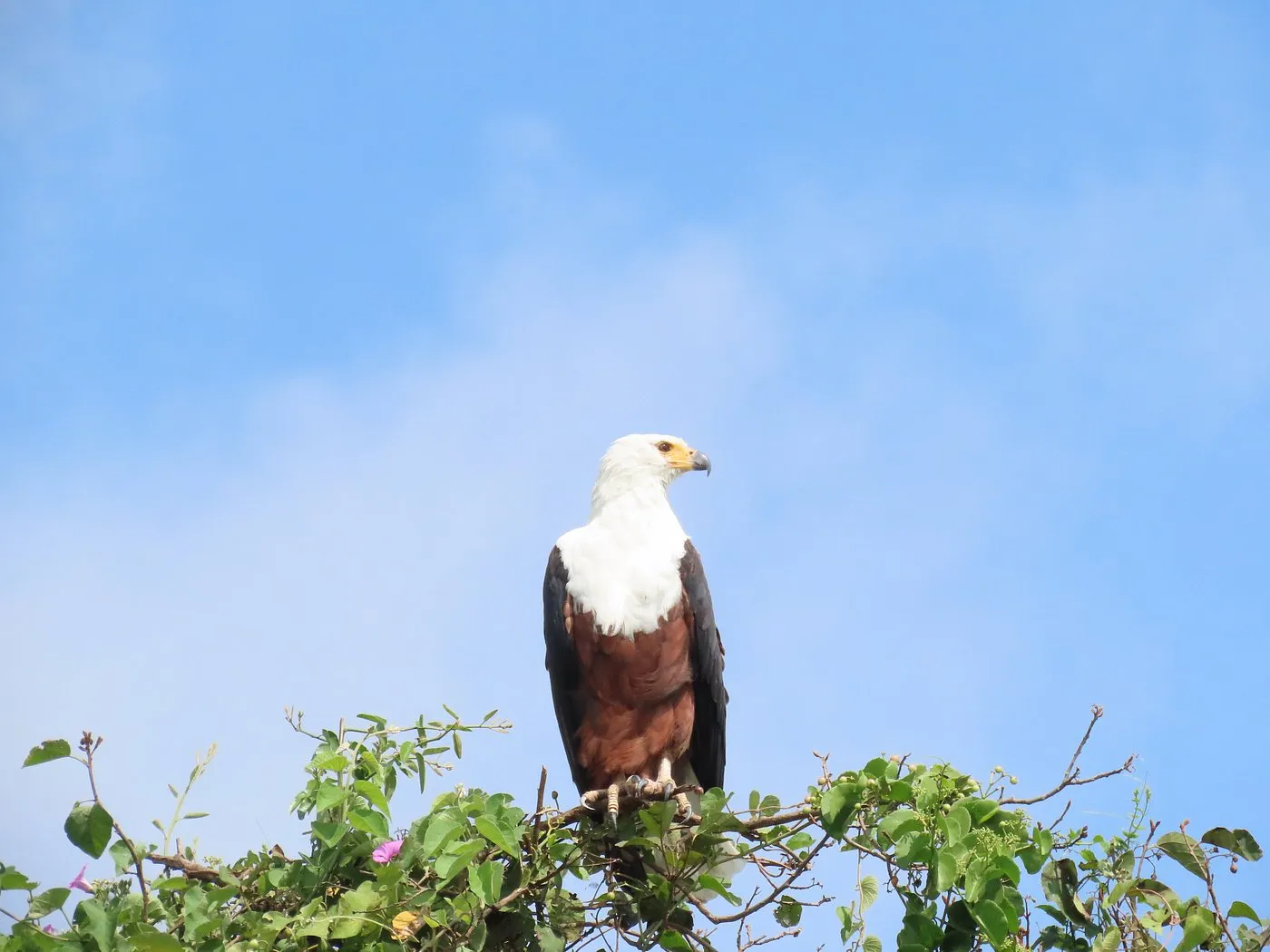
- African fish eagle – Often seen perched above the water, with its white head and chest easy to identify.
- Pied kingfisher – Frequently hovers before plunging into the channel after small fish.
- Great white pelican – Usually seen floating in groups or resting along open banks.
- African jacana – Walks across floating vegetation with long toes that spread its weight.
- Malachite kingfisher – Small, bright, and easy to miss unless it darts from reeds near the boat.
- Cormorants and herons – Often seen drying wings, stalking fish, or standing motionless in shallow water.
Bird activity is one reason a boat safari is rewarding even when large mammals are resting. A slow cruise can reveal constant behavior: hunting, preening, calling, nesting, and competing for space.
The best times for wildlife viewing
Boat safaris on the Kazinga Channel usually run during the day, and both morning and afternoon trips can be excellent.
Morning trips often bring softer light, cooler air, and active birds. This is a strong choice for photography because glare is lower and animals may still be moving from early feeding or drinking.
Afternoon trips can be especially good for seeing elephants, buffalo, and other mammals near the water. As the day heats up, animals often come to drink or cool down. The late afternoon light can also add warmth to photos.
The dry seasons are often popular for wildlife viewing because animals rely more heavily on permanent water sources. In western Uganda, drier periods commonly fall around December to February and June to August, though weather patterns can vary. The wetter months can still be rewarding, especially for birds and lush scenery.
For many visitors, the best choice is simple: take the boat safari when the light is good and allow enough time in Queen Elizabeth National Park for more than one activity.
Practical tips for better photos on the boat
Boat safaris create great photo chances, but they also bring movement, reflection, and changing angles. A little preparation helps.
- Use a zoom lens in the range of 200 mm or more if possible.
- Set a fast shutter speed for moving animals and birds.
- Keep gear protected from spray and dust.
- Avoid leaning too far over the boat for a shot.
- Watch behavior, not just faces. Drinking, fishing, splashing, and wing-drying tell a stronger story.
- Shoot in bursts when birds take off or hippos surface.
- Keep backgrounds clean when possible. A fish eagle against open water often looks stronger than one lost in reeds.
- Respect the guide’s instructions, especially near hippos and crocodiles.
A phone can still work well, especially for wide scenes, elephants close to the bank, and video clips. For birds, a camera with optical zoom has a clear advantage.
FAQ
How long does a Kazinga Channel boat safari take?
Most boat safaris take a few hours, depending on the operator and schedule. That is usually enough time to explore productive sections of the channel and watch wildlife without rushing.
Is a boat safari safe around hippos and crocodiles?
Yes, when run by trained guides and licensed operators. Hippos and crocodiles are powerful wild animals, so visitors should stay seated, follow instructions, and avoid sudden movements near the edge of the boat.
Can children join a Kazinga Channel boat safari?
Many operators allow children, and the calm pace can make it a good family activity. Check age rules with the operator before booking, and bring sun protection, water, and patience for younger travelers.
What should I bring on the boat?
Bring binoculars, a camera, sunscreen, a hat, drinking water, and a light rain jacket if the weather looks uncertain. Neutral clothing is useful, but comfort matters most on the boat.
A Kazinga Channel boat safari is one of those wildlife experiences where the setting does much of the work. The water draws animals in, the boat offers a quiet viewing platform, and every bend can bring a new subject. For travelers who want hippos, elephants, crocodiles, and exceptional birdlife in one trip, this channel is hard to beat.