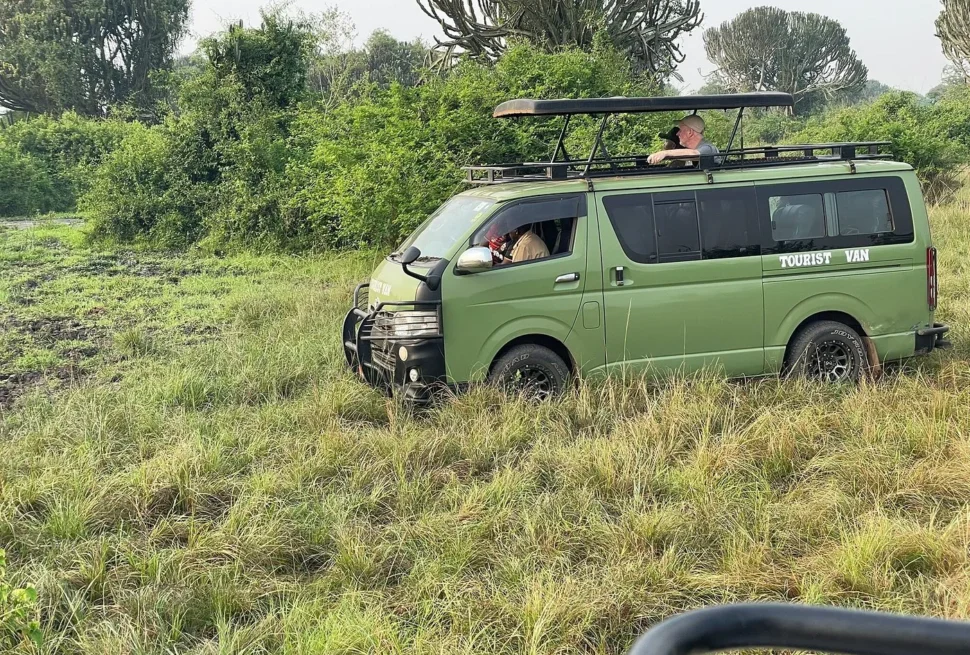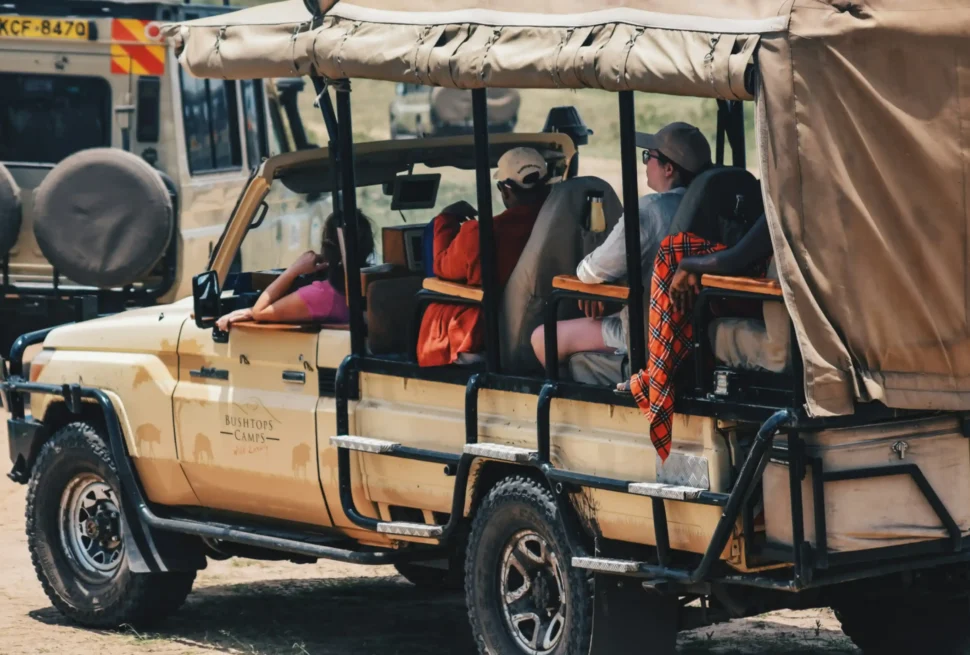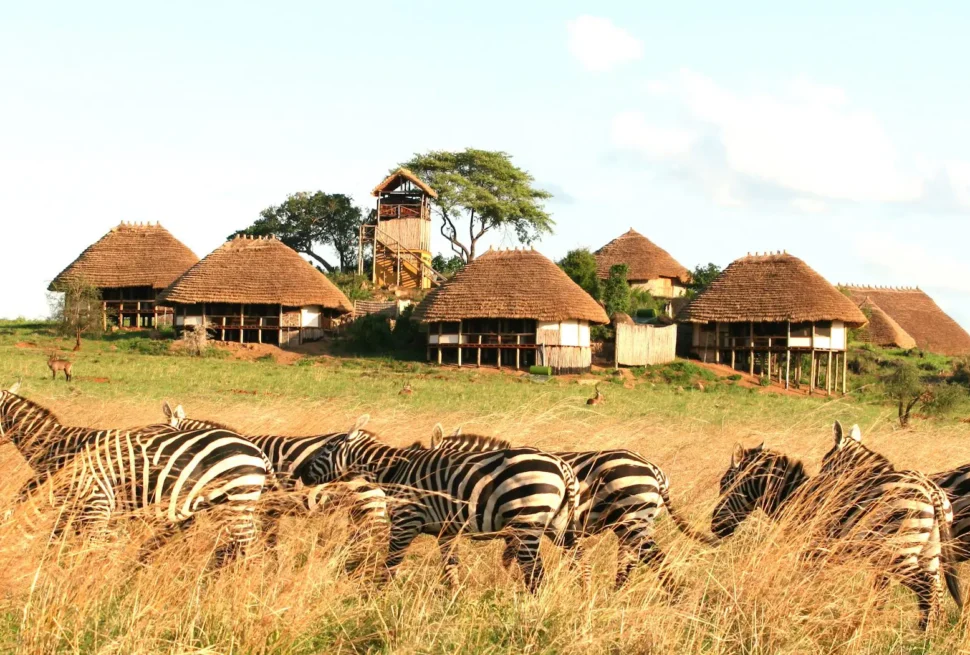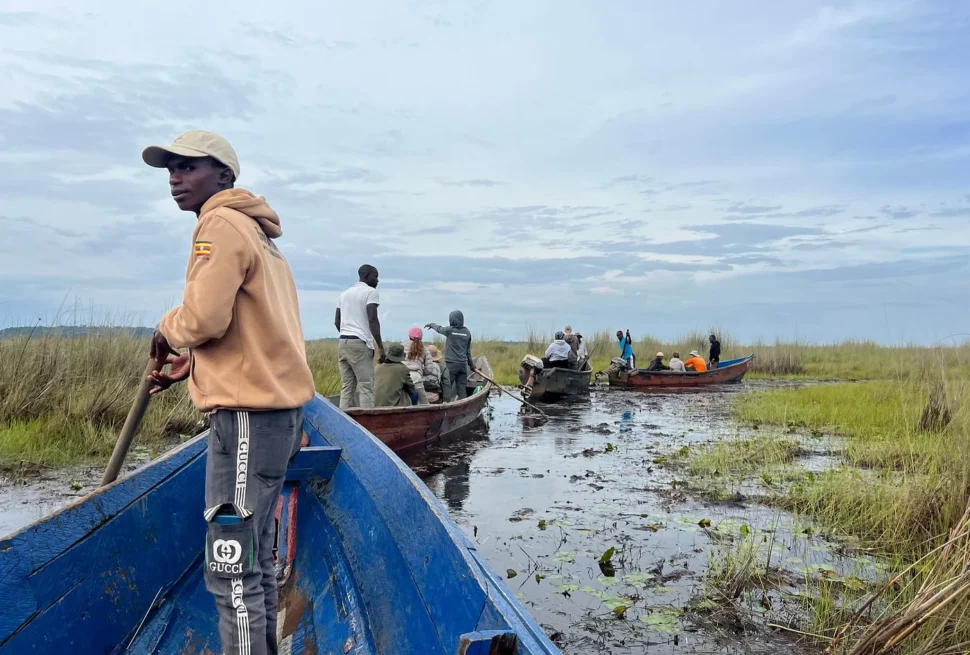
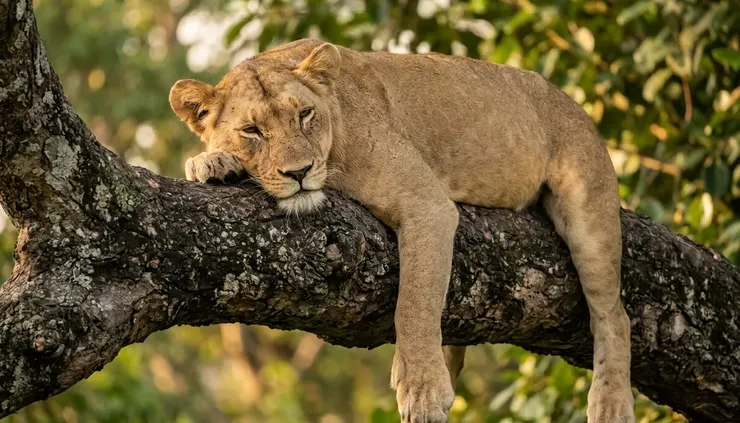
A lion in a tree still looks slightly impossible, even when it is right in front of you. In Ishasha, the southern sector of Uganda’s Queen Elizabeth National Park, this rare behavior is the headline act: tawny cats draped over fig branches like oversized house cats, paws hanging loose, tails flicking in the heat.
Tree-climbing lions occur in only a few places in East Africa, and Ishasha is one of the most reliable. The area’s open savanna, scattered fig trees, candelabra euphorbia, Uganda kob, and quiet tracks make it one of the best safari detours in Uganda.
Why Ishasha lions climb trees
Lions can climb, but most do not spend much time in trees. Ishasha’s lions do it often enough that the behavior has become part of the sector’s identity.
Wildlife guides usually point to a mix of practical reasons:
- Cooling off in the heat A branch catches more breeze than the grass, especially during hot afternoons.
- Avoiding biting insects Tsetse flies and other insects can be worse at ground level.
- Getting a better view A tree offers a look across the plains, where Uganda kob and other prey move through the grass.
- Resting safely Lions sleep for long hours, and a broad fig branch makes a shaded platform away from disturbance.
No single reason explains every climb. The behavior likely continues because cubs and younger lions see older animals doing it. Over time, it becomes a local habit passed through the pride.
The best locations to find tree-climbing lions in Ishasha
Sightings are never guaranteed, but some parts of Ishasha consistently give visitors the best odds. A knowledgeable Uganda Wildlife Authority ranger or local safari guide can read recent tracks, vultures, kob movement, and fresh reports from other vehicles.
The southern circuit near the Ishasha River
The southern circuit is often the first choice for lion searches. The Ishasha River forms part of the border area between Uganda and the Democratic Republic of the Congo, and nearby tracks pass through classic lion country: open plains broken by large fig trees.
This route is especially rewarding during the warmer part of the day, when lions may leave the grass and climb into shade. Scan every large horizontal branch. Lions resting above eye level can blend into bark and shadow better than expected.
The northern circuit plains
The northern circuit offers broader views and good chances of finding prey animals. Where kob gather, lions are often not far away. The trees here may be more spread out, so patient scanning matters.
A common safari story from Ishasha goes like this: a vehicle stops for antelope, someone casually checks a fig tree, and only then does the group notice a lioness stretched across a branch directly above the track. Many visitors miss the first lion because they are searching the grass, not the canopy.
Tracks around kob grazing areas
Uganda kob are a key prey species in Queen Elizabeth National Park. In Ishasha, lions often spend time near areas where kob graze or gather. These plains can be productive in the early morning, when predators may still be moving after the night.
Look for clues before looking for lions:
- Kob staring in one direction
- Alarm calls from antelope or birds
- Fresh paw prints on sandy tracks
- Vultures circling or waiting in trees
- Hyenas moving with purpose
The best sightings often start with signs, not the animal itself.
The best time of year for sightings
Ishasha can be visited year-round, but the dry seasons are usually best for wildlife viewing. In western Uganda, these commonly fall from June to September and from December to February, though weather patterns can shift.
During drier months, grass is shorter, tracks are easier to drive, and animals tend to be more visible around reliable water and grazing areas. Dusty conditions can occur, but visibility is often better than in thick green-season grass.
The wetter months can still be beautiful. The plains turn green, birdlife is rich, and visitor numbers may be lower. The trade-off is that some tracks can become muddy, vegetation gets thicker, and lions may be harder to spot from a distance.
For time of day, plan two different approaches:
| Best time | What to expect |
| Early morning | Lions may still be active, walking, hunting, or returning from a night movement. |
| Midday to afternoon | Tree sightings can improve as lions seek shade, breeze, and rest. |
| Late afternoon | Warm light helps photography, and lions may begin to stir again. |
Tips that make an Ishasha safari better
Tree-climbing lion sightings reward patience more than speed. Rushing from one track to another often means passing a lion that is hiding in plain sight.
Go with a guide who knows Ishasha. Local knowledge matters because lion prides shift with prey, weather, and recent disturbance. A good guide will check known fig trees, read tracks, and speak with rangers or other drivers without crowding wildlife.
Bring binoculars. A lion’s belly, ear, or tail can look like a branch from far away. Binoculars also help identify birds, antelope behavior, and movement across the plains.
Use a zoom lens if photographing. A phone can capture the memory, but a camera with reach will do better without pushing close. Responsible distance keeps the sighting calm.
Stay quiet at sightings. Lions in trees may look relaxed, but loud voices and vehicle noise can disturb them. Calm behavior also improves the experience for everyone nearby.
Plan enough time. A quick transit through Ishasha may work, but one night nearby is better. Two drives, one early and one afternoon, can change the outcome of the visit.
Nearby attractions for a fuller Queen Elizabeth trip
Ishasha fits well into a broader western Uganda itinerary. Many travelers combine it with the northern section of Queen Elizabeth National Park or with gorilla trekking farther southwest.
Top nearby additions include:
- Kazinga Channel Boat safaris here are known for hippos, crocodiles, elephants, buffalo, and strong birdlife.
- Mweya Peninsula A classic base for game drives and channel excursions in the park’s northern area.
- Kyambura Gorge A forested gorge where guided chimpanzee tracking is offered, subject to permits and conditions.
- Crater lakes The park region has scenic crater landscapes, especially around the route between Queen Elizabeth and Fort Portal.
- Bwindi Impenetrable National Park Ishasha is often used as a safari stop before or after gorilla trekking in Bwindi, especially the Buhoma area.
Where to stay near Ishasha
Accommodation in and around Ishasha ranges from rustic to high-end. Staying close to the sector saves driving time and helps with early starts.
Well-known options include Ishasha Wilderness Camp, often chosen for a remote riverside feel, and mid-range lodges such as Enjojo Lodge or Ishasha Jungle Lodge, depending on routing and availability. Some travelers also stay farther north in the main Queen Elizabeth area, though that means longer drives to reach the lion habitat.
When choosing a lodge, ask three practical questions:
- How far is it from the Ishasha game-drive tracks?
- Can the lodge arrange an experienced guide or ranger?
- Does the schedule allow both morning and afternoon drives?
The answers matter more than luxury if the main goal is finding lions.
A final word from the tracks
One of the most common reactions after an Ishasha sighting is disbelief. Visitors often describe the same moment: the guide stops, points into a fig tree, and for several seconds nobody sees anything. Then the shape appears. A paw. A mane. A tail swinging below the branch. The whole tree suddenly becomes a lion.
That is the magic of Ishasha. It rewards slow travel, sharp eyes, and time spent in the right places. For the best chance, focus on the southern and northern circuits, travel in the dry season if possible, and give yourself more than one drive. The lions may be asleep, but the search is anything but dull.