Kigali is one of the smartest gateways for seeing Uganda’s mountain gorillas. The drive to southwestern Uganda can be shorter than traveling from Entebbe, and the route crosses highland farms, volcanic foothills, crater country, and thick forest before reaching gorilla habitat.
Uganda has two main gorilla trekking destinations: Bwindi Impenetrable National Park and Mgahinga Gorilla National Park. Both protect mountain gorillas, an endangered species found only in Uganda, Rwanda, and the Democratic Republic of Congo. The experience is tightly managed by park authorities, with permits, ranger guides, group limits, and strict wildlife rules.
Why Kigali works well as a starting point
Kigali sits close to the Rwanda-Uganda border. From the city, travelers can reach Uganda’s southern gorilla trekking areas by road through crossings such as Cyanika or Katuna/Gatuna, depending on the final park sector and current border operations.
The biggest advantage is time. Driving from Entebbe or Kampala to Bwindi often takes most of a day. From Kigali, the drive to southern Bwindi or Mgahinga is commonly shorter, though road conditions, border checks, weather, and your chosen sector all affect timing.
This route works especially well for:
- Short trips of 2 to 4 days
- Travelers already visiting Rwanda
- Those who want Uganda’s gorilla permit system and park options
- Itineraries combining gorillas with Lake Bunyonyi, Queen Elizabeth National Park, or golden monkey trekking
A good plan includes at least one night near the park before trekking. Gorilla briefings usually start early, and mountain roads are slow in the dark or during rain.
The best time to trek and why
Gorilla trekking in Uganda runs year-round. Gorillas do not migrate out of the parks, and permits are issued in every season. The best time depends on how much rain, mud, and visitor traffic you want to handle.
June to September is the most popular dry season
June, July, August, and September are often favored because trails are usually drier. That can make hiking easier, especially in steep areas such as Nkuringo and parts of Bwindi.
This is also a busy travel period in East Africa. Permits and lodges can sell out early. Book well ahead if traveling in these months.
December to February is another strong window
December, January, and February also tend to bring drier conditions. Trekking can still be muddy because Bwindi is a rainforest, but trails are often more manageable than in the peak rainy months.
This period works well for travelers combining gorillas with savanna wildlife in Uganda or Rwanda.
March to May and October to November are wetter but rewarding
The wetter months bring heavier forest growth, quieter trails, and lush scenery. Rain can fall hard, and paths can become slippery. Treks may take longer because ranger teams adjust routes based on gorilla movements and trail conditions.
The benefit is atmosphere. Mist hangs in the canopy. Waterfalls run stronger. Birdlife is active. For photographers, the forest can look rich and dramatic.
The best overall months for most travelers are June to September and December to February, but a good rain jacket matters in every season.
Permits needed for gorilla trekking in Uganda
A gorilla permit is mandatory. It gives access to one guided trek and, if the gorilla family is found, up to one hour with the gorillas. The Uganda Wildlife Authority manages permits for Uganda’s national parks.
Permit rules can change, so confirm current details with the Uganda Wildlife Authority, a licensed tour operator, or the lodge arranging the trek.
What a Uganda gorilla permit usually includes
A standard permit covers:
- Entry for the gorilla trekking activity
- Ranger guide services during the trek
- One hour near a habituated gorilla family once located
- Assignment to a trekking sector or park area
It does not usually include transport, accommodation, porter fees, tips, meals, visas, or border costs.
How to obtain a permit
Permits are commonly booked in two ways.
Book through a licensed tour operator
This is the easiest option for a Kigali-to-Uganda trip. The operator can match the permit to the right border crossing, lodge, and driver schedule. This reduces the risk of holding a permit for one sector while your accommodation sits hours away on difficult roads.
Book through the Uganda Wildlife Authority
Independent travelers can also inquire directly with the Uganda Wildlife Authority. You will need a travel date, preferred park or sector, passport details, and payment according to UWA rules.
Book the right sector
Bwindi has several trekking sectors, and they are not interchangeable on the day. If your permit is for Rushaga, you trek in Rushaga. If it is for Buhoma, you trek in Buhoma.
This matters because driving between sectors can take hours. Always align these three things:
- Permit sector
- Lodge location
- Border route from Kigali
Know the key permit rules
Most gorilla treks follow strict conservation rules:
- The minimum trekking age is commonly 15 years
- Group sizes are limited, often to eight visitors per gorilla family
- Time with the gorillas is limited to one hour
- Visitors who are sick may be refused trekking to protect gorillas from disease
- Flash photography is not allowed
- Rangers decide the safe viewing distance and behavior rules
Mountain gorillas share close genetic traits with humans, so respiratory infections are a serious risk. If you have flu symptoms, report them before trekking.
Recommended routes from Kigali to Uganda
The best route depends on the trekking sector. Do not choose a route only by distance on a map. Mountain roads, border timing, and weather matter more than straight-line distance.
| Route from Kigali | Best for | What to expect |
| Kigali to Cyanika border to Kisoro | Mgahinga, Rushaga, Nkuringo | Scenic volcanic views, a strong route for southern parks |
| Kigali to Katuna/Gatuna border to Kabale | Rushaga, Ruhija, Lake Bunyonyi | Good for combining gorillas with Kabale and Lake Bunyonyi |
| Kigali to Kabale to Ruhija | Ruhija sector | Higher elevation roads and strong birding potential |
| Kigali to Buhoma | Buhoma sector | Longer drive, useful for northern Bwindi and onward trips to Queen Elizabeth National Park |
Route one from Kigali to Mgahinga
Mgahinga Gorilla National Park sits in the Virunga range near Rwanda and the Democratic Republic of Congo. From Kigali, travelers often route toward the Cyanika border and Kisoro.
Mgahinga is smaller than Bwindi, but it offers a powerful setting. The park lies below volcanoes covered with bamboo and montane forest. It is also known for golden monkey tracking, which can pair well with a gorilla trek.
This route suits travelers who want volcanic scenery and a compact itinerary.
Route two from Kigali to Rushaga or Nkuringo
Rushaga and Nkuringo sit in southern Bwindi. They are among the most practical sectors for travelers coming from Kigali.
Rushaga is often chosen because it has several gorilla families and a range of lodges. Nkuringo is known for steep terrain and wide views toward the Virunga volcanoes. The hiking can be harder, but the scenery is outstanding.
Expect curving mountain roads, tea and banana farms, terraced hills, and sudden views across deep valleys.
Route three from Kigali to Ruhija
Ruhija lies in eastern Bwindi. It is cooler, high, and forested. Birders often like this area because Bwindi is one of Africa’s top birding forests, with Albertine Rift endemics found in the region.
The route usually works well when combined with Kabale or Lake Bunyonyi. It can also connect onward to Queen Elizabeth National Park.
Route four from Kigali to Buhoma
Buhoma is in northern Bwindi and has a long history of gorilla tourism. It may take longer to reach from Kigali than the southern sectors, but it works well for itineraries that continue north toward Ishasha or Queen Elizabeth National Park.
Buhoma also offers forest walks and community visits, which can fill a second day after trekking.
What to expect on trekking day
Gorilla trekking starts early. After breakfast, travelers gather at the park briefing point. Rangers explain the rules, assign groups, and match trekkers to gorilla families based on permit allocation, fitness, and gorilla location reports.
Trackers often go ahead into the forest before visitors start hiking. They look for signs such as broken vegetation, dung, nests, and calls. Gorillas move daily, so no trek is exactly the same.
A trek may take a couple of hours, or it may take most of the day. Terrain can include:
- Steep forest slopes
- Muddy trails
- Thick vines and roots
- Bamboo zones
- Open viewpoints
- Narrow paths cut by rangers
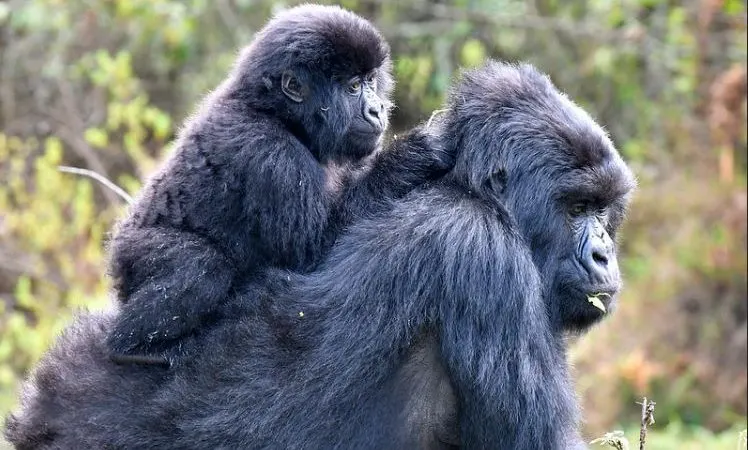
When the group reaches the gorillas, the mood changes. Voices drop. Cameras come out. Rangers position visitors safely. A silverback may sit with his back turned, feeding calmly. Young gorillas may climb, tumble, or watch from branches. Mothers often keep infants close.
The one-hour limit protects the gorillas from stress and too much human contact. It also keeps the experience controlled and respectful.
Wildlife and scenery along the way
The gorillas are the main reason to go, but the journey from Kigali to Uganda adds much more.
Mountain gorillas
Mountain gorillas are the highlight. They live in family groups led by dominant silverbacks. Uganda’s gorilla populations are protected in Bwindi and Mgahinga, with conservation work involving park authorities, researchers, rangers, and neighboring communities.
Seeing them in thick forest feels different from a typical wildlife drive. There is no vehicle barrier. You hike into their habitat, then wait quietly while they eat, rest, groom, and move.
Golden monkeys
Golden monkeys live in the Virunga region and can be tracked in Mgahinga. They are fast, bright, and active in bamboo zones. Adding golden monkey tracking creates a strong two-day primate itinerary.
Forest birds and primates
Bwindi supports rich birdlife and other forest species. Look for turacos, hornbills, sunbirds, and calls from the canopy. Other primates may include black-and-white colobus monkeys, blue monkeys, and L’Hoest’s monkeys, though sightings vary.
Highland scenery
The route itself is memorable. Expect steep green hills, eucalyptus stands, banana groves, small towns, misty valleys, and crater-like folds in the land. Near Kisoro and Mgahinga, the volcanoes dominate the horizon.
Lake Bunyonyi is a common stop before or after trekking. It is known for island-dotted water, cool air, canoe rides, and relaxed lodges. It also breaks up the drive between Kigali and Bwindi sectors.
Tips for a safe and successful trek
Good preparation makes the day easier. Gorilla trekking is not a technical climb, but it is a real hike in wet mountain forest.
Pack the right gear
Bring practical clothing and keep it light.
- Waterproof hiking boots with grip
- Long pants and a long-sleeve shirt
- Rain jacket or poncho
- Garden gloves or light trekking gloves
- Gaiters or long socks to guard against mud and ants
- Refillable water bottle
- Snacks or packed lunch
- Small daypack
- Insect repellent
- Camera with no flash
Neutral colors work best. Avoid bright white clothing because it shows mud and can stand out in the forest.
Hire a porter
Porters carry bags, help on slippery slopes, and support local income. Hiring one is one of the simplest ways to make the trek safer and more comfortable.
Even strong hikers benefit from free hands on steep trails.
Be honest about fitness
Tell the ranger team if you need an easier pace. Groups are often assigned with ability in mind where possible. This is not a race. Rangers want everyone to return safely and calmly.
If knees are an issue, trekking poles help. If rain is likely, waterproof your documents and electronics.
Follow the ranger’s instructions
Rangers understand gorilla behavior. Listen closely when they ask the group to stop, lower voices, move back, crouch, or avoid eye contact.
Never touch a gorilla. Never feed wildlife. Keep the required distance. If a gorilla approaches, stay calm and follow ranger guidance.
Plan border and visa details early
A Kigali-to-Uganda trip crosses an international border. Check passport validity, visa rules, health documents, and entry requirements before travel. Requirements can change, so confirm with official immigration sources or a licensed operator.
Build time into the itinerary for border procedures. Do not schedule a same-morning border crossing before a gorilla trek.
A simple Kigali to Uganda gorilla itinerary
A short itinerary can work, but it should not feel rushed.
Three-day sample route
Day 1
Leave Kigali in the morning. Cross into Uganda. Continue to Kisoro, Rushaga, Nkuringo, or another sector depending on the permit. Sleep near the trekking point.
Day 2
Attend the early briefing and complete the gorilla trek. Return to the lodge. Rest or take a short community walk if energy allows.
Day 3
Drive back to Kigali, or continue to Lake Bunyonyi, Queen Elizabeth National Park, or Mgahinga for golden monkey tracking.
Four-day sample route
A fourth day gives more breathing room. Add Lake Bunyonyi, a second primate activity, or a slower return to Kigali. This is a better choice for photographers, birders, or anyone who dislikes tight travel days.
FAQ
Is it better to trek gorillas in Uganda from Kigali or Entebbe?
Kigali is often more practical for southwestern Uganda because the drive to Mgahinga and southern Bwindi can be shorter. Entebbe works better if the trip includes more of Uganda, such as Kampala, Murchison Falls, or multiple national parks.
How hard is gorilla trekking in Uganda?
Difficulty ranges from moderate to hard. The forest is steep, wet, and uneven. Some groups find gorillas quickly, while others hike for several hours. Fitness helps, but patience and good footwear matter just as much.
Can gorilla sightings be guaranteed?
No wildlife sighting is 100 percent guaranteed. That said, ranger teams and trackers know the gorilla families well, and sightings are very reliable when conditions allow. Follow park guidance and allow a full day for the activity.
How far in advance should a gorilla permit be booked?
Book as early as possible, especially for June to September and December to February. Popular sectors can sell out. Early booking also helps secure lodges close to the right trekking point.
What should I do if I feel sick before the trek?
Report symptoms to your guide or park staff. Gorillas can catch human illnesses, especially respiratory infections. Park authorities may restrict participation to protect the gorillas.
The takeaway
Gorilla trekking from Kigali to Uganda combines smart logistics with one of Africa’s most moving wildlife encounters. Choose the right season, match the permit to the correct sector, sleep near the briefing point, and prepare for mud, hills, and changing weather.
The reward is worth the effort: a quiet hour in mountain forest with gorillas that exist nowhere else on Earth.