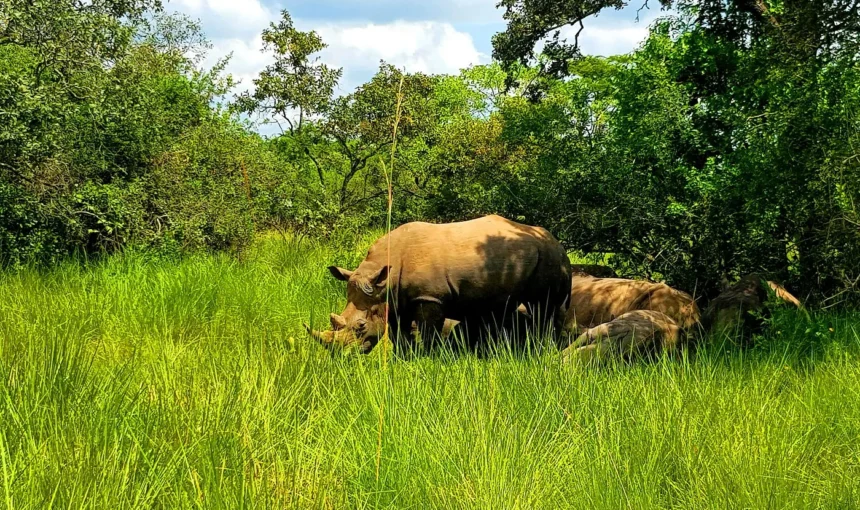
A rhino sighting in Uganda is more than a wildlife moment. It is a glimpse of a species being rebuilt after disappearing from the country’s wild spaces.
Ziwa Rhino Sanctuary, in central Uganda’s Nakasongola District, plays a central role in that story. The sanctuary protects southern white rhinos under close monitoring and gives visitors a rare chance to track them on foot with trained guides. For many travelers, it becomes one of the most memorable stops between Kampala and Murchison Falls National Park.
Ziwa Rhino Sanctuary helps restore Uganda’s rhino story
Uganda once had wild rhinos, including northern white rhinos and eastern black rhinos. By the early 1980s, rhinos had disappeared from the country due to poaching, civil unrest, and loss of protection in key habitats. That loss was not just symbolic. Rhinos shape ecosystems through grazing, seed dispersal, and the creation of trails and open feeding areas used by other animals.
Ziwa Rhino Sanctuary was created to support rhino conservation and breeding in Uganda. It works with conservation partners and government wildlife authorities to protect rhinos in a managed setting, with the long-term goal of helping Uganda recover a stable rhino population.
The sanctuary is not a zoo. The rhinos roam across large natural habitat, and rangers monitor them daily for safety, health, and protection. This model matters because rhinos face ongoing threats across Africa, especially poaching for horn. The International Union for Conservation of Nature lists white rhinos as near threatened, while black rhinos remain critically endangered.
At Ziwa, the conservation work has a practical shape:
- Daily ranger patrols help prevent poaching and track rhino movements.
- Veterinary support helps monitor injuries, births, and overall health.
- Visitor fees help pay for protection, staff, and sanctuary operations.
- Local employment links conservation to community benefit.
That mix of protection, tourism, and local involvement is one reason rhino tracking at Ziwa Rhino Sanctuary feels different from a standard safari drive. The experience connects directly to the survival of the animals being observed.
Rhino tracking is quiet, guided, and surprisingly intimate
Rhino tracking at Ziwa usually begins with a briefing from sanctuary staff. Guides explain safety rules, expected behavior, and what the tracking walk may involve. The goal is to see rhinos without disturbing them.
Visitors then travel with a guide and often a ranger to an area where rhinos were last monitored. Depending on where the rhinos are, the activity may include a short drive, a walk through grassland or woodland, or both. Tracking time can vary because the rhinos move, rest, graze, and respond to heat through the day.
The experience is usually done on foot, which changes the mood completely. A rhino seen from a vehicle is impressive. A rhino seen at ground level, while standing quietly behind a guide at a safe distance, feels far more powerful.
White rhinos are generally grazers, often seen feeding in open areas. They have wide mouths designed for cropping grass, unlike black rhinos, which browse on leaves and shrubs. Guides often explain these differences during the walk, along with how rangers identify individuals by body shape, horn form, ear markings, or behavior.
Visitors can expect:
- A guided walk at a careful pace
- Clear rules about distance and silence
- Stops for observation and photography
- Guidance on where to stand and how to move
- A strong focus on respect for the animals
The best moments often come from patience. A rhino grazing calmly, a calf staying close to its mother, or a group resting in shade can say more than any dramatic encounter.
Safety rules protect both people and rhinos
Rhinos are large wild animals, and Ziwa’s guides treat them with the respect they deserve. White rhinos can weigh well over a ton, and even calm animals need space. The safety briefing is not a formality.
A few rules matter most:
- Keep behind the guide unless told otherwise.
- Speak softly and avoid sudden movements.
- Do not try to get closer for a photo.
- Turn off camera sounds and flash.
- Follow instructions immediately if a guide asks the group to move.
These rules protect visitors, but they also reduce stress for the rhinos. Responsible wildlife viewing depends on restraint. The best photo is never worth changing an animal’s behavior.
How to prepare for a rhino tracking adventure
A little preparation makes the walk more comfortable and respectful.
Wear neutral outdoor clothing. Earth tones such as olive, brown, grey, or khaki blend better with the environment. Bright colors are not ideal for wildlife tracking.
Choose closed walking shoes. The ground may include grass, dust, mud, thorns, or uneven paths. Sandals are not suited to the activity.
Carry water and sun protection. Uganda’s heat can build quickly, especially during late morning or afternoon. A hat, sunscreen, and refillable water bottle help.
Bring binoculars if possible. Even when guides keep a safe distance, binoculars allow better viewing without pressure to move closer.
Pack light. A small daypack is enough. Heavy bags become annoying during a walking activity.
Check timing and availability ahead of your visit. Conditions, weather, and sanctuary procedures may change. Booking through a trusted tour operator or directly with the sanctuary helps avoid confusion.
Listen more than you talk. Guides and rangers know the rhinos as individuals. Their knowledge adds context, from feeding habits to conservation challenges.
Tourism can help conservation when it is done responsibly
Wildlife tourism has real impact. At its best, it funds protection, creates jobs, and gives communities a reason to support living wildlife. At its worst, it can crowd animals, reward unsafe behavior, and turn conservation into entertainment.
Ziwa’s model shows why responsible tourism matters. Visitor fees help sustain the people and systems that keep rhinos safe. Guides, trackers, rangers, hospitality staff, and nearby communities all form part of the conservation chain. When travelers choose ethical wildlife activities, they support the idea that a living rhino is worth far more than poached horn or lost habitat.
The responsibility does not sit only with sanctuaries. Visitors also shape outcomes through daily choices. Staying on marked routes, refusing illegal wildlife products, avoiding litter, and choosing operators that respect animals all make a difference.
A rhino tracking walk may last only a short time, but its meaning stretches further. It supports a future where Uganda’s rhinos are not just remembered, but protected and growing.
FAQ
Where is Ziwa Rhino Sanctuary located?
Ziwa Rhino Sanctuary is in Nakasongola District in central Uganda. It is commonly visited on the route between Kampala and Murchison Falls National Park.
Is rhino tracking at Ziwa done on foot?
Yes, the main rhino tracking experience is usually on foot with trained guides and rangers. A vehicle may be used to reach the starting area, depending on where the rhinos are.
Are the rhinos at Ziwa wild?
The rhinos live in a large protected sanctuary and roam through natural habitat. They are closely monitored for conservation and security, but the viewing experience is not a zoo-style enclosure.
What is the best time for rhino tracking?
Early morning is often comfortable because temperatures are cooler and wildlife may be more active. Afternoon tracking can also be possible, depending on sanctuary schedules and conditions.
Is rhino tracking suitable for children?
Many families visit Ziwa, but age rules and safety requirements can change. It is best to check with the sanctuary or tour operator before booking, especially for younger children.
A conservation walk worth taking seriously
Rhino tracking at Ziwa Sanctuary is exciting because rhinos are rare, powerful, and unforgettable at close range. It is meaningful because every well-managed visit supports a larger conservation effort in Uganda.
Go prepared, follow the guides, keep a respectful distance, and treat the experience as more than a sighting. The real reward is not just seeing a rhino. It is knowing that careful protection and responsible travel can help bring a lost species back into Uganda’s future.