A royal court once stood in Nyanza as the political and cultural heart of Rwanda. Today, the King’s Palace Museum lets visitors step inside that world, not through ruins alone, but through architecture, ritual, cattle traditions, and stories that still shape Rwanda’s national identity.
Set in Rwanda’s Southern Province, Nyanza is closely tied to the last centuries of the Kingdom of Rwanda. The site brings together a reconstructed traditional royal residence, a colonial-era palace building, and the famous Inyambo cattle, whose sweeping horns and ceremonial care reflect the prestige of the old monarchy.
For travelers interested in Rwandan culture and history, this is one of the most meaningful stops in the country.
A brief history of the Nyanza King’s Palace
Nyanza became one of the best-known royal capitals of the Kingdom of Rwanda, especially during the later period of the monarchy. Before Rwanda became a republic, the king, or mwami, held deep political, spiritual, and cultural authority. The royal court was not only a residence. It was a center of governance, ceremony, diplomacy, wealth, and oral tradition.
The Kingdom of Rwanda grew over centuries through centralized rule, alliances, military organization, cattle wealth, and ritual authority. Nyanza rose in importance as a seat of royal power where chiefs, advisors, cattle keepers, poets, and messengers gathered around the court.
The palace most visitors see today is a reconstruction of the traditional royal compound. It helps show how Rwanda’s pre-colonial kings lived and how royal space was organized. Nearby stands a later palace building associated with King Mutara III Rudahigwa, who ruled during the colonial period and became an important figure in Rwanda’s transition into the modern era.
The monarchy ended in the early 1960s, before Rwanda gained independence. Yet the memory of the kingdom remains central to how many people understand Rwanda’s past. At Nyanza, that memory is not abstract. It has shape, texture, sound, and place.
This is why the Nyanza King’s Palace Rwanda History Culture Architecture and Visitor Guide matters for anyone planning a thoughtful visit. The museum does more than present royal objects. It connects visitors to a layered story of authority, identity, colonial change, and cultural continuity.
Why Nyanza mattered in the Kingdom of Rwanda
Nyanza was not just another town attached to royal history. It was a capital of the kingdom and a place where the rhythms of court life shaped national affairs.
The royal court depended on a wide network of specialists. Cattle keepers cared for royal herds. Poets preserved praise songs and genealogies. Advisors helped manage relations between the king, chiefs, lineages, and regions. Craftspeople supplied court objects, building materials, and ceremonial items. The palace was the visible center of a much wider system.
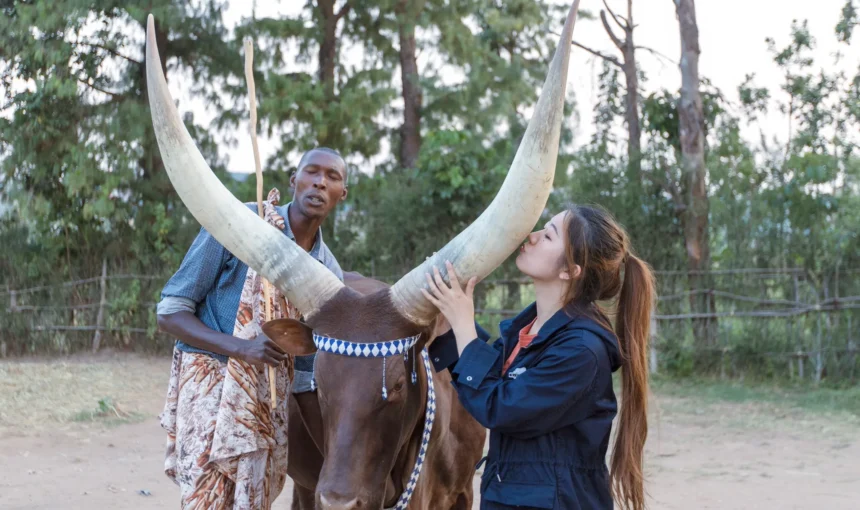
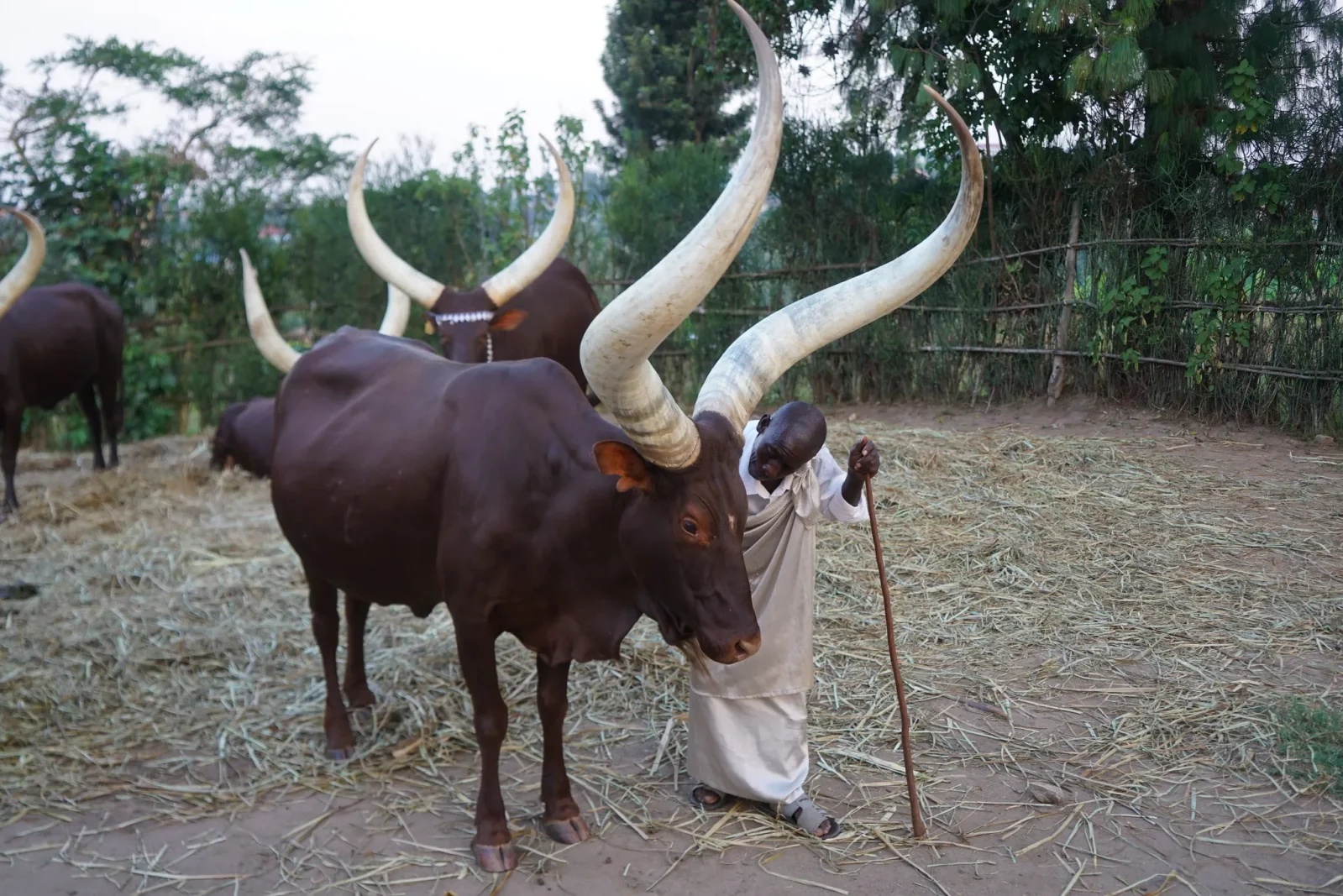
Cattle played a special role. In Rwanda’s royal culture, cattle were linked to wealth, honor, social bonds, and sacred kingship. The finest royal cattle, known as Inyambo, were trained and cared for with ceremony. Their long horns and graceful bearing became symbols of royal dignity.
The court also reflected Rwanda’s oral traditions. History was passed down through storytelling, praise poetry, names, songs, and ritual performance. A visit to Nyanza helps explain why architecture alone cannot tell the whole story. The site matters because it brings together buildings, animals, memory, and performance.
The traditional palace and its architectural meaning
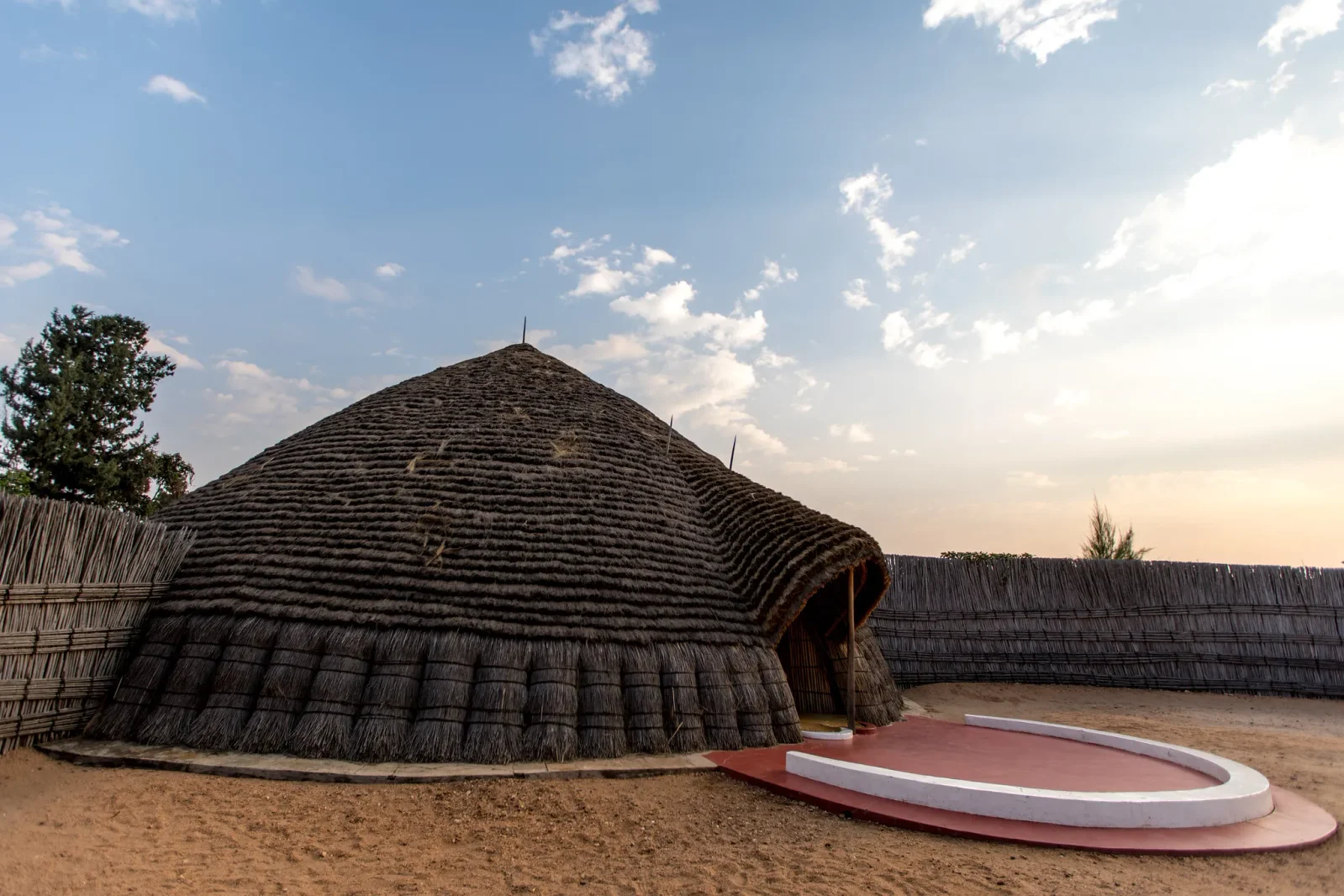
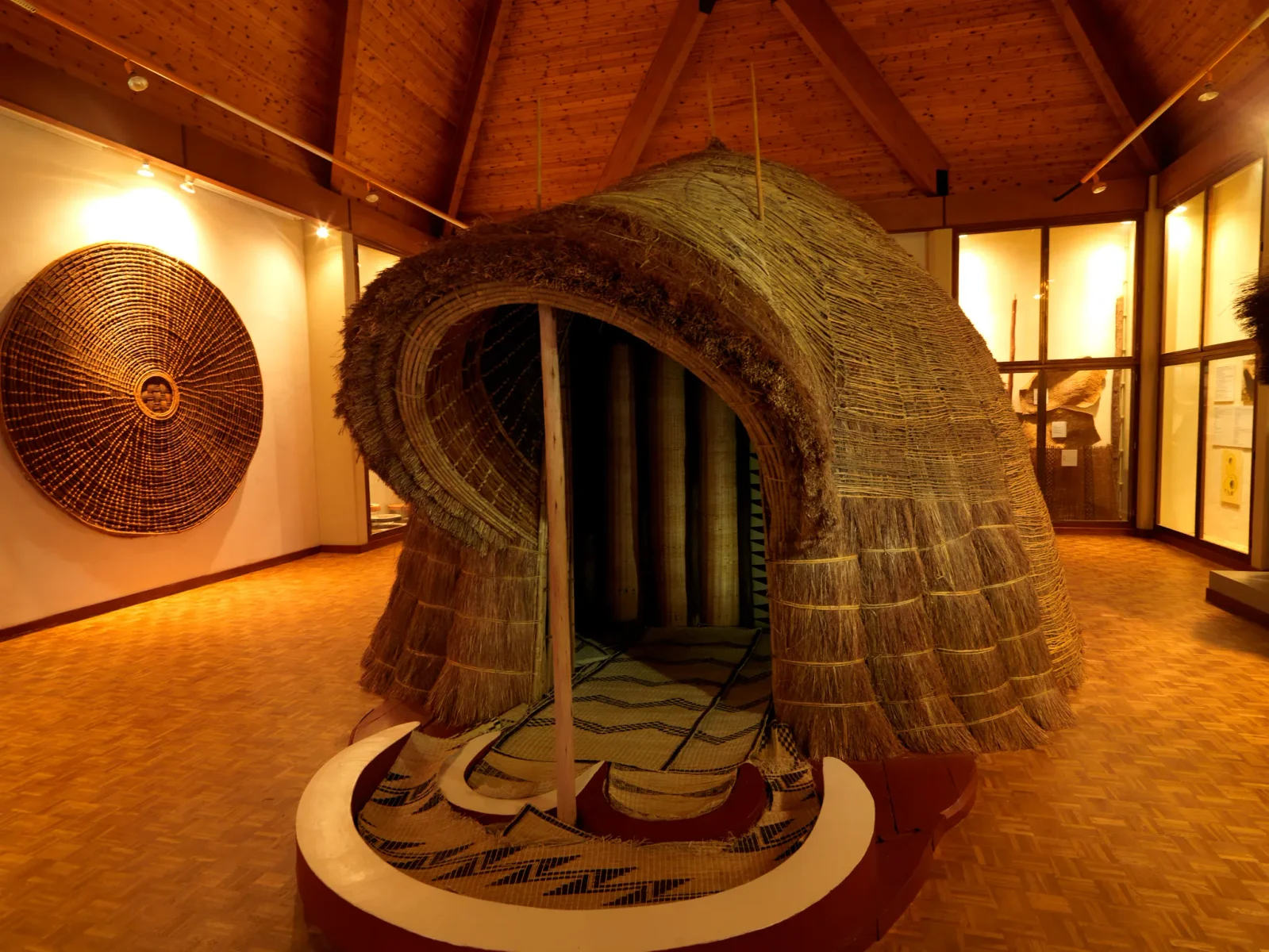
The reconstructed royal palace is often the most memorable part of the visit. Its form is striking from a distance, with a tall rounded roof rising from the earth like a woven crown.
The building follows the style of traditional Rwandan royal architecture. It uses natural materials such as wood, reeds, grass, and thatch. These were not chosen only because they were available. They also reflected local knowledge, climate, and social meaning.
The beehive shape creates strength and symbolism
The palace’s rounded, beehive-like form is one of its defining features. This shape helps shed rain, protect the interior, and create a stable structure using flexible natural materials. It also gives the palace a sense of enclosure and importance.
The circular design supports the idea of the royal household as a protected center. Visitors do not simply walk into a square room. They enter a carefully arranged space that feels ceremonial from the start.
Woven materials show skill and order
The interior and exterior surfaces depend on careful weaving. Reeds and grasses form patterns that are both practical and decorative. The craftsmanship shows how architecture served daily life while expressing hierarchy and identity.
In many traditional Rwandan spaces, woven elements were more than ornament. They reflected care, discipline, and respect for social order. At the palace, the precision of the materials helps communicate the dignity of the royal court.
The compound layout guided movement
A royal residence was not a single isolated house. It functioned as a compound with areas for different roles and degrees of access. Space mattered. Who could enter, where they could stand, and how they moved through the courtyard all reflected rank and protocol.
This is one reason a guided visit can be useful. Guides often explain how rooms, entrances, and outer areas related to royal ceremony and daily life. Without that context, the palace may look simple. With it, the structure becomes a map of power.
The colonial-era palace tells a second story
Near the traditional residence is a very different building, a European-influenced palace linked to King Mutara III Rudahigwa. Its style reflects the colonial period, when Rwanda was under European administration and royal authority was reshaped by outside political forces.
This contrast is one of the most powerful parts of the site. The traditional palace speaks to pre-colonial royal culture, while the later palace shows a period of change, pressure, and adaptation. Together, they show that Rwandan history cannot be frozen into one moment.
King Mutara III Rudahigwa is remembered for his role during a time of major social and political shifts. His reign took place under colonial rule, and Rwanda was moving toward the end of monarchy and the beginning of independence-era politics. The palace associated with him helps visitors place the royal institution within the 20th century, not only the distant past.
The two buildings also create an architectural conversation. One uses local materials and traditional forms. The other reflects imported styles and colonial influence. Standing between them, visitors can see how power, identity, and design changed over time.
The Inyambo cattle are living royal heritage
For many visitors, the Inyambo cattle are a highlight. These long-horned cattle are not presented as ordinary livestock. They are part of Rwanda’s royal heritage and carry deep cultural meaning.
Their horns stretch wide and high, creating an unforgettable silhouette. Traditionally, royal cattle were carefully selected, trained, and praised. Special herders cared for them and learned songs associated with their movement and beauty.
At the museum, visitors may see handlers demonstrate how the cattle respond to calls or songs. This moment often makes the site feel alive rather than purely historical. It shows that heritage can be carried in living practices, not only in objects behind glass.
The Inyambo also help explain the role of cattle in older Rwandan society. Cattle could represent wealth, alliance, status, and blessing. In the royal context, they became part of the visual language of kingship.
What to see during a visit
A visit to the King’s Palace Museum usually includes several key experiences. The exact flow can vary, but the main attractions are consistent.
The reconstructed royal residence
This is the best place to understand traditional royal architecture. Take time to look at the roof, walls, interior layout, and courtyard rather than treating it as a quick photo stop.
The colonial-era royal palace
This building adds historical depth. It helps connect the monarchy to Rwanda’s more recent past and the changes brought by colonial rule.
The Inyambo cattle
If the cattle are present and a demonstration is available, do not rush it. Their role in royal culture is central to the meaning of the site.
Museum interpretation
Displays and guides help explain royal customs, political structures, and cultural practices. Ask questions, especially about the relationship between architecture and ceremony.
Practical tips for exploring the Nyanza King’s Palace
The palace is accessible as part of a Southern Province itinerary and is often combined with stops in Huye, Butare, or other cultural sites. Planning ahead will make the visit smoother.
Choose the best time of day
Morning is often a good time to visit. The light is softer for photography, temperatures may be more comfortable, and the site can feel calmer. Late afternoon can also be beautiful, especially around the thatched palace and the cattle enclosure.
Rwanda has rainy seasons and drier periods, but rain can occur at different times of year. A light rain jacket or umbrella is useful, especially if visiting several outdoor sites in one day.
Take a guided tour if possible
A guide can change the experience completely. The palace’s value lies in meaning, not size. A guide can explain:
- How the royal compound was organized
- Why certain materials were used
- What the Inyambo cattle represented
- How Nyanza fit into Rwanda’s political history
- How the monarchy changed during the colonial period
Without that background, it is easy to miss the deeper story.
Dress and move respectfully
The King’s Palace is a cultural heritage site, not only a tourist attraction. Comfortable walking shoes are helpful, but respectful clothing and behavior also matter.
Ask before photographing people, especially guides, handlers, or performers. If a cattle demonstration takes place, follow staff instructions and keep a safe distance.
Allow enough time
The site can be visited in a short stop, but it rewards a slower pace. Plan enough time to walk through both palace areas, listen to explanations, watch the cattle if available, and take in the setting.
For travelers interested in history or architecture, this is not a place to rush.
Nearby attractions to add to your itinerary
Nyanza fits well into a wider cultural journey through southern Rwanda. Several nearby or regional attractions pair naturally with the King’s Palace.
| Attraction | Why it pairs well with Nyanza |
| Ethnographic Museum in Huye | One of Rwanda’s major cultural museums, with exhibits on traditional life, tools, crafts, and social history. |
| Rwesero Art Museum | Located in Nyanza, this museum offers a different view of Rwandan creativity through visual art. |
| Huye town | A useful base for exploring southern Rwanda’s cultural and educational heritage. |
| Nyungwe National Park | Farther southwest, this rainforest destination pairs culture with nature for a longer itinerary. |
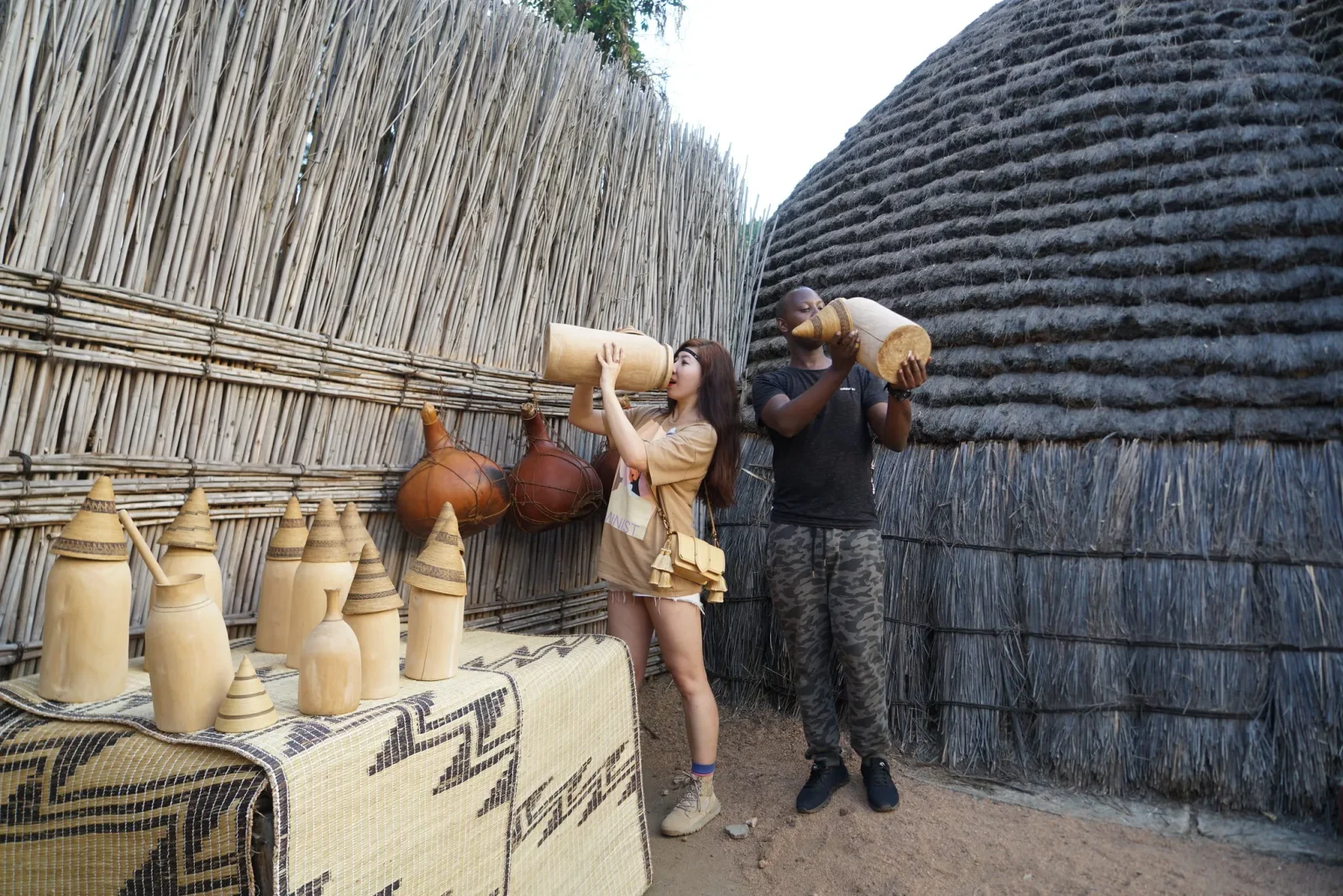
| Local craft stops | Basketry, weaving, and other crafts help connect museum heritage with living skills. |
If time allows, pair Nyanza with Huye for a strong cultural day. The King’s Palace gives the royal and political story, while the Ethnographic Museum broadens the view into daily life, technology, belief, and social customs.
How to make the most of the experience
The best way to visit Nyanza is with curiosity and patience. The palace is not designed to overwhelm with scale. Its power is quieter. It sits in the details.
Look at how the roof meets the walls. Notice the curve of the compound. Watch how the Inyambo cattle carry themselves. Listen for the way guides connect objects to memory. Ask how the court functioned, who served there, and how power was expressed before written records became dominant.
A few simple questions can open the site:
- What parts of the palace are based on older royal designs?
- How did royal ceremonies use this space?
- Why were Inyambo cattle so closely tied to kingship?
- How did colonial rule change the monarchy?
- What does Nyanza mean to Rwandans today?
These questions turn the palace from a beautiful stop into a richer encounter with Rwandan history.
Why the Nyanza King’s Palace belongs on a Rwanda itinerary
Rwanda is often known to travelers for its mountain gorillas, national parks, and dramatic hills. Those experiences are unforgettable, but Nyanza adds something different. It offers a direct encounter with the country’s historical foundations.
The King’s Palace Museum helps explain how Rwanda’s monarchy worked, how architecture expressed authority, and how traditions such as Inyambo cattle keeping continue to carry meaning. It also shows the complexity of Rwanda’s passage through pre-colonial rule, colonial pressure, monarchy, and modern nationhood.
Nyanza King’s Palace in Rwanda stands as a testament to the nation’s rich history and cultural heritage. Visitors can explore the grandeur of the royal architecture and learn about the intricate social structures that defined the monarchy. The museum not only showcases the significance of Inyambo cattle but also offers insights into the interplay between tradition and modernity. Engaging with this historical site invites a deeper appreciation for Rwanda’s enduring legacy and the values that continue to resonate within its society.