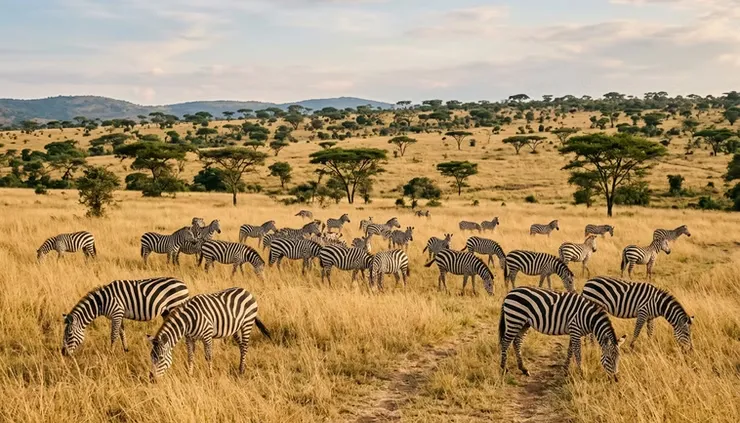
Lake Mburo National Park is one of the few places in Uganda where a safari can begin with boots on the ground instead of wheels on a track. Set between Kampala and the western safari circuit, the park is small by East African standards, but that is part of its appeal. Its open grasslands, acacia woodland, lakes, rocky ridges, and wetland edges sit close together, which makes it ideal for a short, rewarding walking safari.
The park is especially known for zebras. Seeing them from a vehicle is one thing. Watching them lift their heads, flick their ears, and move across the grass while standing at ground level gives the encounter a different kind of weight. Lake Mburo is also home to impalas, elands, buffaloes, warthogs, hippos, crocodiles, topi, waterbucks, and many bird species. Because the park has few large predators compared with places such as Queen Elizabeth or Murchison Falls, guided walking safaris are a central part of the experience.
For travelers heading to Bwindi, Mgahinga, Lake Bunyonyi, or Queen Elizabeth National Park, Lake Mburo is more than a convenient pause. It is a chance to slow down, stretch after a long drive, and experience Uganda’s wildlife at eye level.
Why Lake Mburo works so well as a stopover
Lake Mburo National Park lies in western Uganda, in the Ankole region, along a common route between Kampala and several major safari destinations. It is often used as a one-night break between long travel days, especially for itineraries that include gorilla trekking in Bwindi Impenetrable National Park.
That practical location does not make it a compromise. The park covers about 370 square kilometers, according to Uganda Wildlife Authority descriptions, making it one of Uganda’s smaller national parks. That size helps visitors experience several habitats in a short time. A morning may start in open savanna, pass through acacia woodland, and end near a papyrus-fringed lake.
The park also has a calm rhythm. Game drives here tend to feel less crowded than in larger parks. On foot, that quiet becomes part of the appeal. Instead of scanning the horizon from a vehicle, walkers notice hoofprints, dung beetles, bird calls, grass seeds, and the way antelope choose open ground when they sense movement.
A walking safari also fits the stopover format well. It does not require a full-day schedule. Many guided walks take place in the cool hours of early morning or late afternoon, leaving time for a transfer, a boat ride, or a short game drive.
The park’s wildlife feels close and varied
Lake Mburo’s wildlife is one of the main reasons it suits walking safaris. The park supports a mix of grazers, browsers, wetland species, and woodland birds within a compact area.
The zebra population is the highlight for many visitors. Uganda has only a limited number of parks where zebras are commonly seen, and Lake Mburo is the most accessible for many itineraries. These are plains zebras, often called Burchell’s zebras in East African safari contexts. Their bold stripes stand out clearly against the dry-season grass, and they are often seen in small herds with impalas, topi, and other grazers.
Impalas are another signature species. In Uganda, they are strongly associated with Lake Mburo, where they are regularly seen in open woodland and grassland. Elands, the largest antelope in Africa, also occur here. They can be shy, but seeing one on foot is memorable because of its size and quiet movement.
Common wildlife sightings may include:
- Zebras grazing in loose groups across open plains
- Impalas feeding near acacia thickets
- Buffaloes and waterbucks in moist grassland
- Warthogs kneeling as they graze
- Hippos and crocodiles along lake shores during boat trips
- Topi standing alert on termite mounds or open ground
- Giraffes in selected areas of the park
- Leopards at night, though sightings are never guaranteed
Birdlife is another strong point. The park is known for savanna and wetland species, with papyrus areas around the lakes adding variety. Visitors may see fish eagles, kingfishers, herons, bee-eaters, hornbills, and many smaller woodland birds.
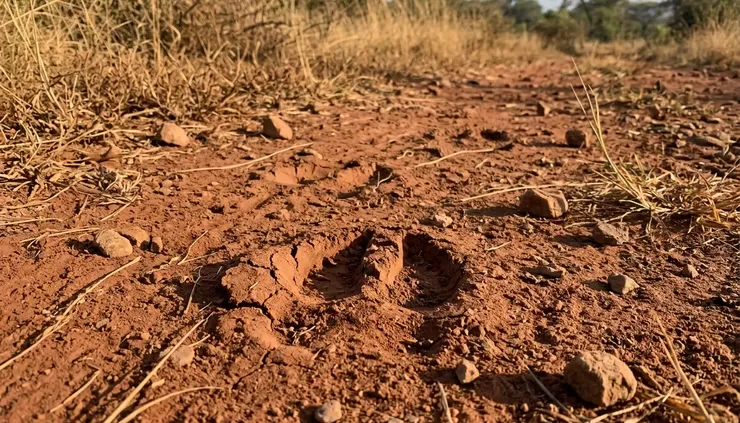
The real value of a walking safari is not only the animals seen. It is the scale. A zebra track in the dust or the smell of crushed wild sage can make the park feel more alive than a distant sighting from a vehicle. – Ezra (Uganda Safari Expert)
What a walking safari in Lake Mburo is really like
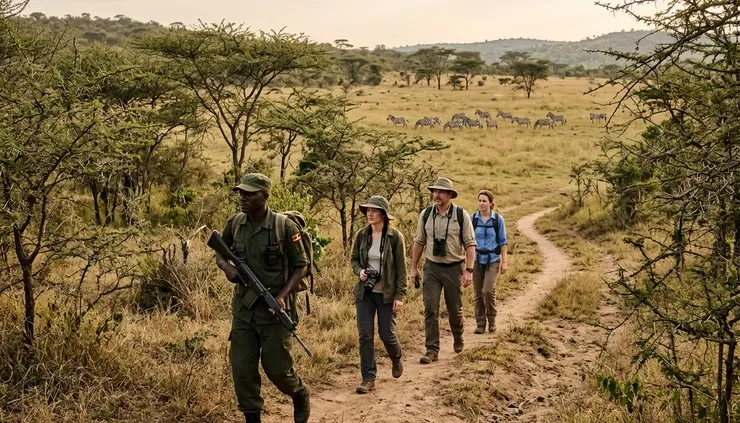
A walking safari in Lake Mburo is not a hike in the ordinary sense. It is a guided wildlife activity led by trained Uganda Wildlife Authority rangers or approved guides. The route changes with conditions, animal movement, weather, and safety concerns.
Most walks begin early. The air is cooler, the light is soft, and animals are active before the heat builds. After a safety briefing, the guide sets the pace. It is usually slow, with frequent stops to read tracks, identify plants, listen for alarm calls, or explain animal behavior.
The best walks are quiet. Talking is kept low. Guests walk in single file or a tight group. The guide watches the wind direction, scans ahead, and chooses when to pause or move.
Expect the focus to be broad, not only on big animals. A good guide may point out:
- Fresh zebra or buffalo tracks
- Dung that shows what an animal has been eating
- Termite mounds and their role in the savanna
- Medicinal or traditional uses of certain plants
- Bird calls that signal movement nearby
- Safe distances for watching antelope, buffalo, or zebra
The most powerful moments are often simple. A visitor who had done vehicle safaris elsewhere in Uganda described Lake Mburo as the first place where the “small signs” of the bush made sense. The guide showed the group where zebras had crossed the path in the night, then minutes later they found the herd feeding in open grassland. That kind of connection is the reason walking safaris stay with people.
Another common reaction from visitors is surprise at how calm the park feels. Without the engine noise of a safari vehicle, the soundscape changes. Hooves in dry grass, turacos calling from woodland, and hippos grunting from the lake become part of the experience.
The best times to visit Lake Mburo for walking safaris
Lake Mburo can be visited throughout the year, but the best walking conditions usually come during the drier months.
Uganda’s dry seasons generally fall from June to August and December to February. During these months, trails are often easier to walk, grass may be shorter, and wildlife can be easier to spot around open areas and water sources. Dry-season light is also excellent for photography, especially in the early morning.
The wetter months, often around March to May and September to November, bring greener scenery and strong birding. The park can look fresh and richly colored during these periods. Walks may still run, but mud, thicker vegetation, and rain showers can change the route or timing.
For the time of day, early morning is usually best. Animals are active, temperatures are lower, and tracks from the night are still easier to read. Late afternoon can also be rewarding, especially for soft light and relaxed grazing scenes.
Midday walks are less appealing. Heat builds quickly, animals rest in shade, and the experience can feel harder than it needs to be.
| Season | What it often means for walking safaris | Best for |
| June to August | Drier trails and clearer visibility | First-time walkers and wildlife viewing |
| December to February | Warm, dry conditions in many years | Photography and short stopovers |
| March to May | Greener scenery and possible rain | Birding and quieter travel |
| September to November | Mixed weather with fresh vegetation | Travelers who do not mind flexible plans |
How to plan a safe and rewarding walking safari
A walking safari is exciting because it feels direct. That same directness means safety rules matter. Lake Mburo is suitable for guided walks, but it is still a wild place with buffaloes, hippos, and other animals that deserve distance and respect.
Book the walk with an authorized guide
Do not walk alone in the park. Walking safaris should be arranged through Uganda Wildlife Authority staff, a licensed lodge, or a reputable tour operator. A trained ranger understands animal behavior, park rules, and safe routes.
Ask in advance about:
- Starting time
- Meeting point
- Expected duration
- Minimum age requirements
- Fitness level needed
- Whether the walk is private or shared
- What happens if rain changes the route
Dress for quiet movement
Neutral clothing helps walkers blend into the environment. Choose khaki, olive, brown, grey, or other muted colors. Avoid bright white, sharp red, or noisy fabrics.
Good footwear matters. Closed walking shoes or light hiking boots are better than sandals. Grass seeds, thorns, uneven ground, and mud are common on safari walks.
Pack light, but bring the essentials:
- Drinking water
- Hat with a brim
- Sunscreen
- Insect repellent
- Small binoculars
- Camera with a quiet setting
- Light rain jacket in wetter months
- Any personal medication needed during the walk
Follow the ranger’s instructions without delay
The safety briefing may sound simple, but it is not optional. Stay behind the guide unless told otherwise. Keep quiet when asked. Do not crowd animals for photographs. Never run if wildlife reacts. The guide will read the situation and direct the group.
Buffaloes require special care. They may look calm while grazing, but they are powerful animals with strong defensive instincts. Hippos also need respect, especially near water or along paths they use between grazing areas and the lake.
Keep expectations realistic
A walking safari is not designed to chase sightings. It is slower and more thoughtful than a game drive. Some walks bring close zebra and antelope views. Others focus more on tracks, birds, plants, and distant herds.
That variety is part of the value. On foot, a single good sighting can feel richer than many quick sightings from a vehicle.
Pair the walk with other Lake Mburo experiences
A stopover in Lake Mburo works best when the walking safari is paired with one or two other activities. The park’s lake system gives it a different feel from purely dry savanna parks.
A boat trip on Lake Mburo is a strong choice. It offers a better chance of seeing hippos, crocodiles, waterbirds, and animals coming to drink. It also gives tired legs a break after a morning walk.
A short game drive adds reach. Vehicles can cover more ground and may help with sightings of giraffes, buffaloes, topi, elands, and nocturnal animals if a night drive is available through approved operators.
Some lodges and nearby areas also offer horseback safaris or cycling experiences, depending on current rules and operator availability. These should always be arranged through licensed providers who understand the park boundaries and safety requirements.
For a one-night stopover, a simple plan works well:
- Arrive in the afternoon and take a short game drive or boat trip
- Stay overnight near or inside the park
- Take an early morning walking safari
- Continue toward Bwindi, Lake Bunyonyi, or another western destination
For two nights, the pace becomes easier and allows time for both a walk and a boat trip without rushing.
Visitor impressions from the trail
Travelers often remember Lake Mburo for its sense of closeness. In larger parks, the main story may be lions, elephants, or long game drives. At Lake Mburo, the story is often quieter but more personal.
One frequent visitor impression is that the zebras feel more vivid on foot. Their stripes are easier to study. Their alert behavior is easier to notice. A herd may pause, watch the group, then move away in a loose line across the grass. The guide may explain how the animals use group awareness to detect risk.
Another common reaction is relief. After long drives between Uganda’s major highlights, a walking safari gives the body something it needs. People step out of the vehicle, move slowly, breathe fresh air, and return with a clearer sense of place.
Guides also shape the memory. A skilled ranger can turn a patch of dusty ground into a story about the night before. Prints, droppings, broken twigs, and bird calls become evidence. By the end of the walk, visitors often realize that the park was full of information from the start. They just needed someone to teach them how to read it.
FAQ
Is Lake Mburo National Park good for first-time walking safaris?
Yes. Lake Mburo is one of Uganda’s most suitable parks for a first walking safari because guided walks are well established, the park is compact, and wildlife viewing can be rewarding without needing a full-day trek.
Can you see zebras on a walking safari in Lake Mburo?
Zebras are commonly associated with Lake Mburo, and many visitors see them during guided walks or nearby game drives. Sightings depend on route, season, and animal movement, so they are likely but never guaranteed.
How long does a walking safari usually take?
Many walks last a few hours, often in the morning or late afternoon. The exact duration depends on the route, weather, lodge arrangements, and guidance from park staff.
Is a walking safari safe in Lake Mburo?
It is considered safe when done with trained, authorized guides and when guests follow instructions. The park still has large wild animals, including buffaloes and hippos, so walking alone is unsafe and not recommended.
What should I wear for a walking safari?
Wear neutral-colored clothing, closed shoes, a hat, and sun protection. Avoid bright colors and noisy fabrics. Carry water, insect repellent, and binoculars if possible.
A small park with a big safari lesson
Lake Mburo National Park proves that a safari does not need to be long, loud, or crowded to be memorable. Its strength lies in access, variety, and the chance to walk through habitat rather than only drive past it.
For travelers crossing Uganda’s western circuit, the park is a natural stopover. For anyone curious about walking safaris, it is one of the best places to begin. The zebras may draw the eye first, but the deeper reward comes from slowing down enough to notice the tracks, birds, wind, grass, and silence that make the bush feel alive.