Uganda is one of Africa’s most rewarding birding countries because the habitats change quickly. In one journey, a keen birder can move from papyrus swamps and Lake Victoria wetlands to Albertine Rift forests, open savannah, crater lakes and lowland rainforest.
That variety is why the best birdwatching destinations in Uganda feel so different from one another. Mabamba is all about the patient search for the Shoebill. Bwindi and Mgahinga reward slow forest birding for Albertine Rift endemics. Semuliki brings Central African forest species to the edge of East Africa. Murchison Falls and Queen Elizabeth add big skies, raptors, waterbirds and classic safari mammals.
This guide focuses on seven strong sites used on serious Uganda birding tours, with realistic notes on what to expect. Bird sightings can never be guaranteed, especially with rare or shy species, but good timing, experienced local guides and enough days in the field make a clear difference.
1. Mabamba Swamp is the best-known Shoebill site near Kampala
For many travellers asking where to see Shoebill in Uganda, Mabamba Swamp is the practical first answer. This community-managed wetland lies on the northern edge of Lake Victoria, within reach of Kampala and Entebbe, making it ideal at the start or end of a safari.
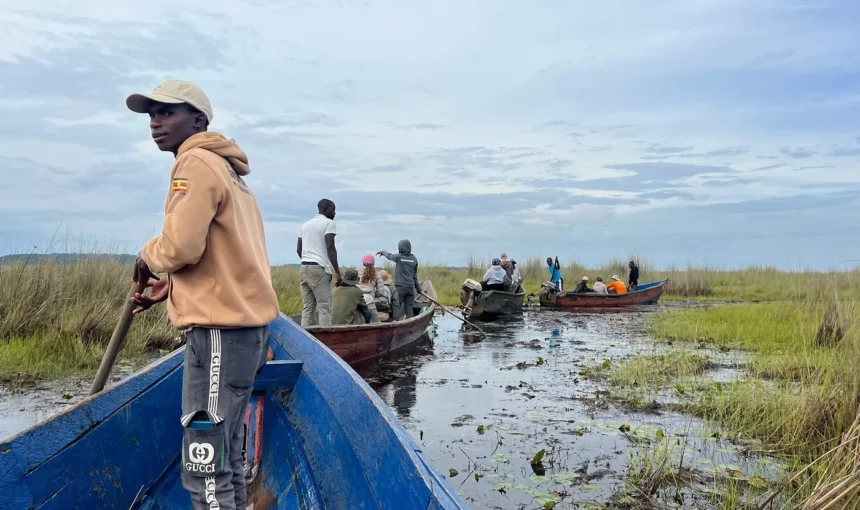
The main birding happens by dugout canoe through papyrus channels and open water. The target is the Mabamba Swamp Shoebill, usually searched for in quiet feeding areas where lungfish occur. A good boat guide reads the wetland carefully, watches herons and egrets, and moves slowly to avoid disturbing birds.
Other species to look for include:
- African Jacana
- Blue-breasted Bee-eater
- Papyrus Gonolek
- Lesser Jacana
- Malachite Kingfisher
- African Pygmy Goose
- Goliath Heron
Early morning is best, both for cooler conditions and feeding activity. Mabamba also works well for photographers because the canoe sits low on the water, but long lenses help. A Shoebill may stand still for long periods, then move suddenly when hunting, so patience matters.
2. Murchison Falls National Park combines Shoebill chances with savannah birding
Murchison Falls birding is excellent because the park includes riverine woodland, Borassus palms, savannah, wetlands and the Victoria Nile. Uganda Wildlife Authority identifies Murchison Falls as Uganda’s largest national park, and that scale gives birders a wide mix of species.
The delta area where the Nile flows toward Lake Albert is one of the important places for Shoebill searches. Boat trips in this area can produce good opportunities, especially when water levels and access are favourable. As always with Shoebill Uganda searches, allow time and keep expectations realistic.
Key birds in and around Murchison include:
- Shoebill, especially around the delta
- Abyssinian Ground Hornbill
- Secretarybird
- Red-throated Bee-eater
- Northern Carmine Bee-eater, seasonal
- Saddle-billed Stork
- African Fish Eagle
- Piapiac
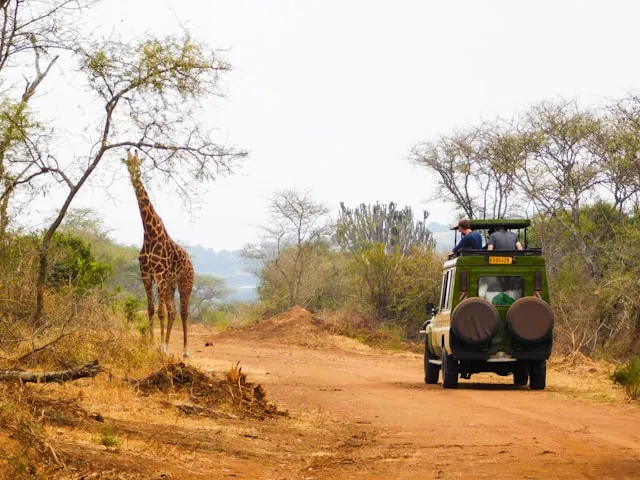
The boat cruise toward the base of the falls is also productive for kingfishers, bee-eaters, herons, cormorants and raptors. Game drives on the northern bank can add open-country birds, while woodland edges reward slow scanning. Murchison is also one of the easiest places to combine birding with elephants, giraffes, lions and other wildlife.
3. Semuliki National Park is Uganda’s doorway to Guinea-Congo forest birds
Semuliki birding feels different from most of Uganda. The park protects lowland forest near the western border, linked biologically to the great Guinea-Congo forest system. For birders, that means species that are difficult or impossible to find in Uganda’s higher forests.
This is not fast birding. Forest birds can be hidden, quiet and high in the canopy. A good guide is essential because calls often reveal birds before the eye finds them.
Sought-after species may include:
- Nkulengu Rail, often heard at night
- White-crested Hornbill
- Black-casqued Hornbill
- Red-billed Dwarf Hornbill
- Yellow-throated Cuckoo
- African Piculet
- Black Dwarf Hornbill
- Crested Malimbe
The Sempaya area and forest trails are productive, while hot springs add a geological stop between birding sessions. The best approach is to spend at least two nights. One quick walk rarely does Semuliki justice.
Semuliki is strongest for experienced birders who want Guinea-Congo forest species, but patient first-time birders also enjoy its atmosphere, butterflies and primates.
4. Bwindi Impenetrable National Park is the classic Albertine Rift birding site
Bwindi birding is one of the main reasons serious birders visit Uganda. The park is best known for mountain gorillas, but conservation sources also recognise it as one of Africa’s most important montane forest bird areas.
Bwindi is a key site for Albertine Rift endemic birds, species found mainly in the Albertine Rift region of Uganda, Rwanda, Burundi and the Democratic Republic of Congo. The forest’s altitude range creates different birding zones, so route choice matters.
Top birding areas include Buhoma, Ruhija, Mubwindi Swamp trail and the road between forest sectors. Ruhija and Mubwindi are especially important for highland specialties.
Key birds include:
- African Green Broadbill
- Grauer’s Warbler
- Shelley’s Crimsonwing
- Handsome Francolin
- Rwenzori Batis
- Strange Weaver
- Black Bee-eater
- Bar-tailed Trogon
Bwindi also holds mixed feeding flocks, where several species move together through the forest. These moments can be intense. A guide may call out birds quickly, so binocular practice before the trip helps.
For many travellers, Bwindi is the heart of a Uganda birding safari because it combines rare birds, forest hiking, gorilla trekking options and cool highland scenery.
5. Mgahinga Gorilla National Park is compact but rich in highland specialties
Mgahinga birding often gets less attention than Bwindi, but it deserves a place on a serious itinerary. The park sits in the Virunga Mountains and protects bamboo, montane forest and high-altitude vegetation. Its compact size makes it a useful addition for birders already visiting southwestern Uganda.
Species to look for include:
- Rwenzori Turaco
- Dusky Crimsonwing
- Kivu Ground Thrush
- Archer’s Robin-Chat
- Rwenzori Double-collared Sunbird
- Mountain Masked Apalis
- Alpine Chat at higher elevations
The Gorge Trail is one of the better-known birding walks. Bamboo zones can be quiet at first, then suddenly active when a feeding flock passes. Weather changes quickly in the mountains, so carry a light rain jacket even in drier months.
Mgahinga pairs naturally with Bwindi. Together, they strengthen the chance of seeing highland Albertine Rift species, though many are still challenging and require time.
6. Queen Elizabeth National Park is ideal for varied savannah and wetland birding
Queen Elizabeth birding is varied, accessible and rewarding. The park includes savannah grassland, crater lakes, wetlands, woodland, the Kazinga Channel and nearby forest edges. Uganda Wildlife Authority highlights the park’s wide habitat range, which explains why bird lists can build quickly here.
The Kazinga Channel boat cruise is one of the best birding experiences in the park. Expect close views of waterbirds such as:
- African Skimmer, seasonal and local
- Great White Pelican
- Pink-backed Pelican
- Yellow-billed Stork
- Water Thick-knee
- Pied Kingfisher
- African Fish Eagle
On game drives, scan for raptors, lapwings, bustards and bee-eaters. The Ishasha sector can add woodland and savannah species, plus the chance of seeing tree-climbing lions, although wildlife sightings vary by day.
Queen Elizabeth is also important for migratory birds at certain times of year. Palearctic migrants, birds that breed in Europe or Asia and spend the non-breeding season in Africa, can add interest from roughly late year into early year.
7. Kibale National Park is excellent for forest birds and primate-rich birding
Kibale birding is best known for forest species, with the added bonus of chimpanzee tracking for travellers who want a mixed wildlife safari. The forest is more accessible than many lowland sites, and guided walks can be very productive.
Look for:
- Green-breasted Pitta, a prized and difficult species
- African Pitta, seasonal and very hard to find
- Black-billed Turaco
- Great Blue Turaco
- Yellow-spotted Barbet
- Hairy-breasted Barbet
- White-naped Pigeon
- Chestnut Wattle-eye
The Bigodi Wetland Sanctuary near Kibale is a strong add-on. It offers community-based guiding and a different mix of wetland, forest-edge and swamp birds. Great Blue Turaco, papyrus-associated species and several sunbirds are possible.
Kibale works well before or after Queen Elizabeth because the drive between them is manageable, and the habitats give a strong contrast. It is one of the best birding spots in Uganda for travellers who want forest birds without committing every day to steep mountain trails.
Best time for birdwatching in Uganda
Birdwatching in Uganda is possible year-round. The best season depends on the target birds and route.
The drier months, often from June to August and December to February, usually make roads, trails and forest walks easier. Wet months can be excellent for breeding activity, calls and fresh plumage, though heavy rain may interrupt birding. Migratory birds are most noticeable during the northern winter period.
For Shoebill searches, early starts matter more than chasing a perfect month. Calm mornings help boat movement and visibility. In forests, the first hours after sunrise are often the most active. By late morning, bird activity drops, especially on hot days.
How to plan a Uganda birding safari
A short birding-focused trip can work in 7 to 9 days if it combines Entebbe, Mabamba, Murchison Falls and one forest site. A stronger birding safari Uganda itinerary usually needs 12 to 16 days, especially if it includes Semuliki, Kibale, Queen Elizabeth, Bwindi and Mgahinga.
A practical route might look like this:
- Entebbe and Mabamba for Shoebill and wetland birds
- Murchison Falls for Nile, delta and savannah birding
- Kibale and Bigodi for forest and swamp species
- Semuliki for Guinea-Congo forest birds
- Queen Elizabeth for waterbirds, raptors and savannah species
- Bwindi and Mgahinga for Albertine Rift endemics
A Uganda-based operator such as Nturo Safaris can adjust the pace for photographers, listers, mixed-interest couples, private groups or travellers adding gorilla and chimpanzee tracking. The best Uganda birding tours are not rushed. They leave space for repeat searches, weather changes and local guide recommendations.
Practical birding tips for Uganda
Bring good binoculars. An 8x or 10x pair is enough for most travellers. Forest birding often favours a wider view, while wetlands and savannahs reward extra reach. Photographers should bring a longer lens if bird images are a priority, plus protection from dust and rain.
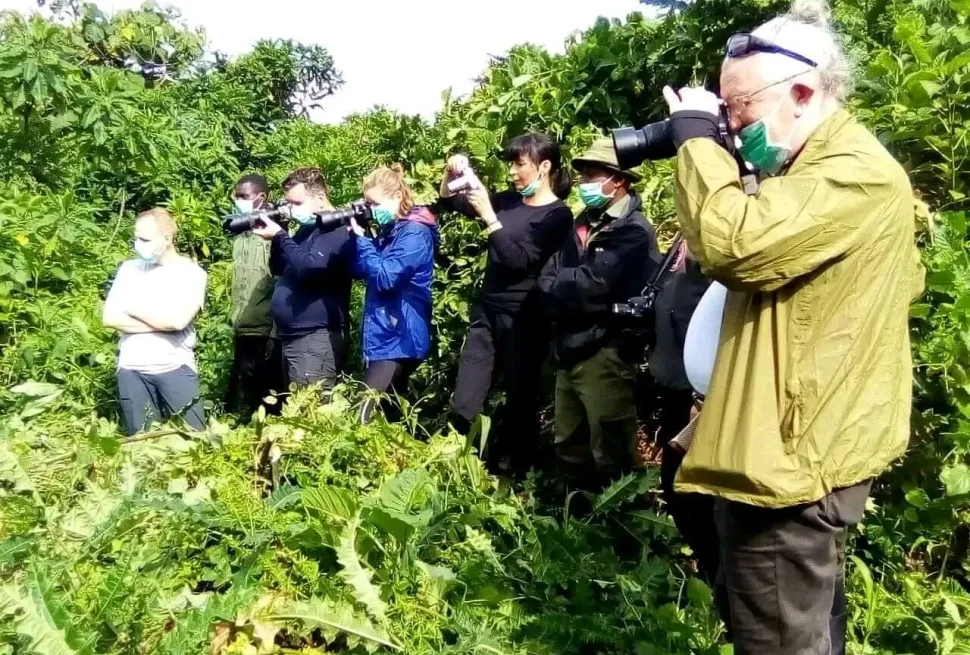
Hire specialist birding guides whenever possible. Uganda has excellent local guides who know calls, seasonal movements and reliable micro-habitats. This matters in Bwindi, Semuliki and Kibale, where many birds are heard before they are seen.
Know the difference between habitats:
- Wetland birding is often slower and open, with canoes or boats used for Shoebill, kingfishers and herons.
- Forest birding demands patience, quiet walking and attention to calls.
- Savannah birding rewards scanning from vehicles, especially for raptors, bustards, hornbills and rollers.
Pack neutral clothing, a field guide or bird app, waterproof shoes, a small notebook and a headlamp for early starts. Avoid playing bird calls loudly or repeatedly. Responsible birding reduces stress on birds and protects the experience for others.
Frequently asked questions about birdwatching in Uganda
What is the best place to see Shoebill in Uganda?
Mabamba Swamp is the most accessible and best-known Shoebill site, especially for travellers starting from Entebbe or Kampala. The Nile delta area in Murchison Falls National Park is another important option. Sightings are never guaranteed.
How many days do I need for a Uganda birding safari?
Allow at least 7 to 9 days for a focused short trip. For a fuller route covering Mabamba, Murchison Falls, Kibale, Semuliki, Queen Elizabeth, Bwindi and Mgahinga, 12 to 16 days is more realistic.
Is Uganda good for beginner birdwatchers?
Yes. Uganda works well for beginners because many large and colourful birds are easy to enjoy, especially in wetlands and savannahs. Forest birding is harder, but a good guide makes it rewarding.
Which parks are best for Albertine Rift endemic birds?
Bwindi Impenetrable National Park and Mgahinga Gorilla National Park are the strongest choices. Key targets include Rwenzori Turaco, Grauer’s Warbler, Rwenzori Batis and other highland forest species.
When is the best time for birdwatching in Uganda?
Birding is good year-round. Drier months usually make travel and walking easier, while wetter periods can bring active breeding behaviour. Migratory birds are most noticeable from late year into early year.
Can I combine birding with gorilla trekking?
Yes. Bwindi and Mgahinga are excellent for both gorilla trekking and birding. Many travellers add extra nights so birding does not feel rushed around trekking permits and transfer days.
Is Semuliki worth visiting for birding?
Yes, especially for experienced birders. Semuliki offers Guinea-Congo forest species that are difficult to find elsewhere in Uganda. It needs patience and a skilled forest guide.
Do I need a spotting scope?
A scope helps in wetlands, lakeshores and open savannah, especially for distant waterbirds and raptors. It is less useful on narrow forest trails, where binoculars are more practical.
Are Uganda endemic birds the same as Albertine Rift endemics?
Not exactly. Many sought-after “Uganda endemic birds” are better described as Albertine Rift endemics or regional endemics, because their range extends beyond Uganda into neighbouring countries. Bwindi and Mgahinga are key sites for them.
Final takeaway
Uganda’s strength is variety. Mabamba and Murchison Falls give the best-known Shoebill opportunities. Bwindi and Mgahinga anchor Albertine Rift endemic birding. Semuliki adds rare Guinea-Congo forest species. Queen Elizabeth and Kibale fill the journey with wetlands, savannah birds, forest specials and excellent wildlife.
For the best results, plan enough time, start early, use skilled local guides and match the route to the birds that matter most. That is how a Uganda birding trip becomes more than a checklist. It becomes a sharp, memorable journey through some of East Africa’s richest habitats.