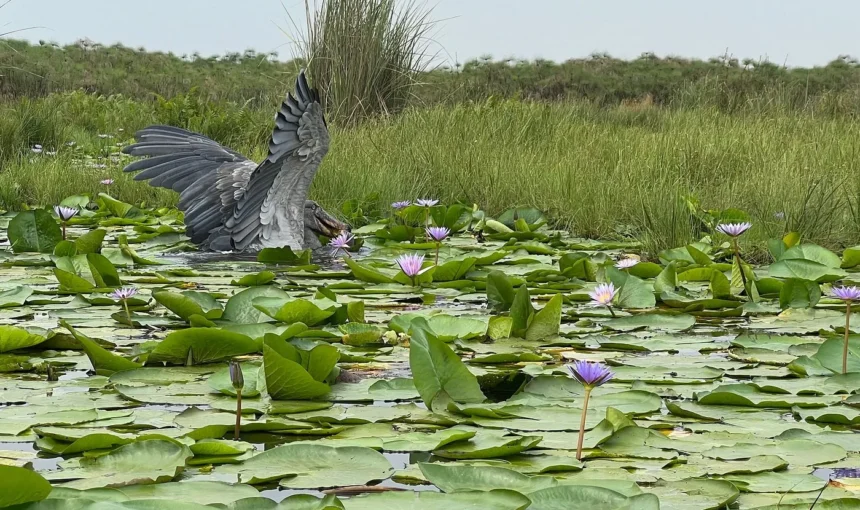
The Shoebill is one of Africa’s most searched-for birds because it looks almost prehistoric, moves with patience, and lives in wetland habitats where access and timing matter. Mabamba Swamp, on the northern edge of Lake Victoria near Entebbe, is one of Uganda’s best-known places to look for it, especially for travelers with limited time.
That does not mean sightings are guaranteed. They never are. The bird ranges through papyrus and marsh channels, and weather, water levels, fishing activity, and the bird’s own movements all affect the day. A good Mabamba trip is about searching carefully, reading the swamp well, and giving the bird space if found.
Nturo Safaris, a Uganda-based safari operator, can arrange guided Mabamba birding experiences as a stand-alone outing from Entebbe or Kampala, or as part of a wider Uganda birding safari.
Why Mabamba is famous for Shoebill birdwatching
Mabamba Bay Wetland is a Ramsar-listed wetland on Lake Victoria’s northern shores. Its mix of papyrus, floating vegetation, open pools, and shallow marsh makes it suitable habitat for the Shoebill, a large wetland bird associated with swamps, floodplains, and areas rich in lungfish and other prey.
For many visitors asking where to see Shoebill in Uganda, Mabamba is practical because it sits within reach of Entebbe and Kampala. That makes it possible to add Mabamba Swamp birding before or after a flight, or before continuing to places such as Murchison Falls, Kibale, Queen Elizabeth, Bwindi, or Lake Mburo.
The Shoebill itself is unmistakable. It is tall, grey, and heavy-billed, with a huge shoe-shaped bill, long legs, pale eyes, and a slow, statuesque hunting style. Conservation groups such as BirdLife International and the IUCN list the Shoebill as a species of conservation concern, mainly because wetlands are being drained, degraded, or disturbed across parts of its range.
Shoebill sightings are never guaranteed in Mabamba Swamp, even with a skilled guide. The right approach improves your chances while protecting the bird and its habitat.
What the Mabamba wetland is like
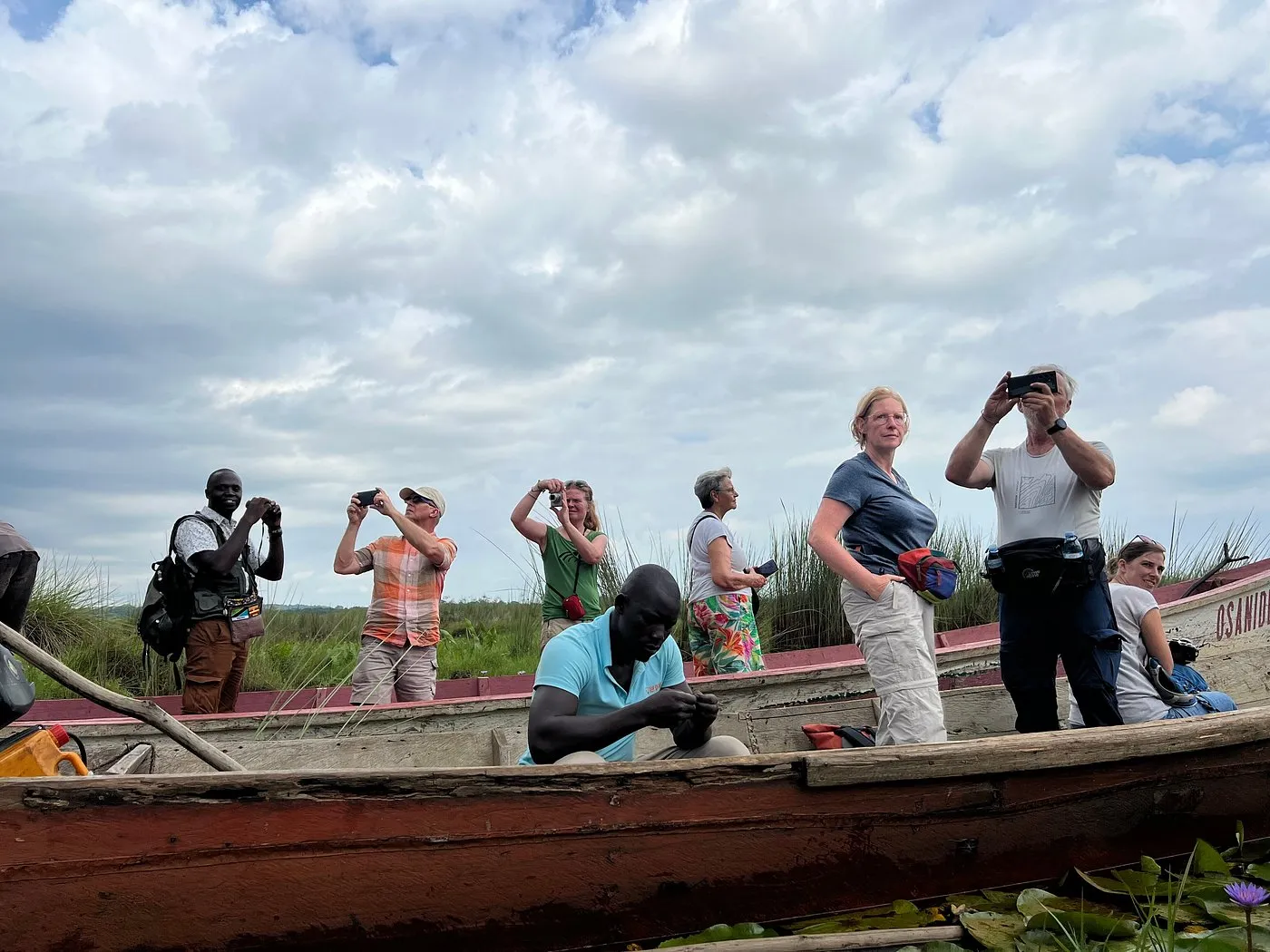
Mabamba is not a boardwalk-style birding site. It is a living wetland used by birds, fishers, guides, and local communities. Most birding takes place by canoe or small boat, moving slowly through channels cut between papyrus and floating vegetation.
Expect a quiet, low-angle experience. You sit close to the water while your guide scans open patches, papyrus edges, and feeding areas. The pace is slow because the best sightings often come from patience rather than distance covered.
Key features that matter for Mabamba Swamp Shoebill searches include:
- Papyrus edges where a Shoebill may stand partly hidden.
- Open pools where it may hunt lungfish or frogs.
- Floating vegetation that attracts smaller birds and fish.
- Quiet back channels where disturbance is lower.
This is also what makes birdwatching in Mabamba Swamp rewarding beyond the Shoebill. Possible species include African Jacana walking over lily pads, Pied Kingfisher hovering before a dive, African Fish Eagle calling from exposed perches, and Papyrus Gonolek in papyrus habitat. Other wetland birds, weavers, herons, egrets, bee-eaters, and kingfishers may also appear.
What a guided canoe or boat trip involves
A typical Mabamba Swamp canoe tour starts near the landing area, where local guides and boat operators organise trips into the wetland. Your guide will usually ask about your main interest, then choose channels based on recent bird activity, water conditions, and time of day.
The search often starts with scanning known feeding areas from a respectful distance. If another guide has seen a Shoebill that morning, guides may share general information, but responsible operators still avoid crowding the bird. The best local guides know when to approach slowly, when to stop, and when to move away.
An experienced guide improves a Shoebill safari Uganda experience in several ways:
- They know which channels are productive in different water conditions.
- They can identify bird calls and movement in thick papyrus.
- They help separate a real sighting from a stump, shadow, or heron.
- They manage boat positioning for views without pushing too close.
- They interpret behaviour, such as hunting posture or signs of stress.
For most visitors, allow a half day for the Mabamba experience from Entebbe, and longer from Kampala depending on traffic and routing. Serious birders may prefer extra time, especially if the Shoebill is not found early or if the goal is to record more birds of Mabamba Swamp.
The best time of day to visit Mabamba
Early morning is usually the best time for Shoebill birdwatching Uganda trips in Mabamba. The air is cooler, light is softer, and bird activity is often higher. Morning also gives guides more time to search before heat, wind, or increased activity on the water affects conditions.
Late afternoon can also be productive, especially for photography, but it usually gives less spare time if the first search is quiet. Midday can be bright and harsh, and birds may be less active.
A sensible plan is to reach the wetland early, begin the canoe trip soon after arrival, then stay flexible. If the Shoebill is found, the guide should help you observe calmly rather than rushing for a closer angle.
How to search without disturbing the Shoebill
Good Shoebill tracking Uganda practice is simple: move slowly, stay quiet, and let the bird decide what happens next. Shoebills may appear calm, but repeated close approaches can affect feeding and resting behaviour.
Use these field habits:
- Keep voices low once inside likely habitat.
- Let the guide control the approach angle and distance.
- Avoid sudden standing or shifting in the canoe.
- Do not clap, whistle, drone, or make sounds to force movement.
- Watch for stress signs, such as repeated walking away, raised posture, or the bird turning from feeding to monitoring people.
- Leave enough space for the bird to hunt.
The best views often come when the canoe stops and everyone waits. A Shoebill may stand still for long periods, then strike suddenly at fish or amphibians. Look for a tall grey shape at the edge of vegetation, a broad bill angled down toward the water, or slow deliberate steps through shallow marsh.
Photography and binocular tips
For binoculars, 8×42 or 10×42 works well in Mabamba. An 8×42 pair gives a wider view and steadier image from a canoe, while 10×42 helps with detail if the bird is farther away. Waterproofing is useful because spray and humidity are common in wetlands.
For photography, a telephoto lens is better than asking the boat to move too close. A zoom in the 100 to 400 mm or 200 to 500 mm range is useful for wildlife, though many travellers still get good record shots with bridge cameras or newer phones when the bird is visible.
Practical camera advice:
- Use a fast enough shutter speed to handle canoe movement.
- Shoot in short bursts when the bird moves or strikes.
- Keep exposure ready for grey feathers against bright water.
- Protect gear in a dry bag between stops.
- Take habitat photos too, not only close portraits.
For ethical images, avoid photos that require flushing the bird or blocking its path. A calm bird feeding naturally is a better record than a stressed bird forced into movement.
What to bring for a Mabamba Swamp birding trip
Pack light, but prepare for sun, humidity, and water.
| Bring | Why it helps |
| Binoculars | Essential for scanning papyrus edges and distant birds |
| Camera with dry bag | Protects gear during water travel |
| Sun hat and sunscreen | Shade is limited on open channels |
| Light rain jacket | Weather can change quickly on Lake Victoria wetlands |
| Neutral clothing | Greens, browns, and greys reduce visual disturbance |
| Drinking water | Canoe trips can feel hot once the sun rises |
| Insect repellent | Wetlands can have biting insects |
| Small notebook or bird app | Useful for recording sightings after the trip |
Avoid heavy bags, bright clothing, and unnecessary noise. If travelling with Nturo Safaris, the team can advise what fits your wider safari route and whether Mabamba is best placed at the start or end of the itinerary.
How to combine Mabamba with Entebbe, Kampala, or a Uganda safari
Mabamba is one of the most convenient options for birding near Entebbe. Travellers can often plan it around arrival or departure days, depending on flight times. Entebbe also pairs well with the Uganda Wildlife Education Centre, botanical gardens, and Lake Victoria shoreline birding.
From Kampala, Mabamba can work as a focused day trip, though road conditions and traffic should be considered. Starting early is the safest plan for both travel time and bird activity.
For a wider Uganda birding safari, Mabamba is a strong opening site because it targets one of the country’s most wanted birds before heading to forest, savannah, and Albertine Rift habitats. A route might combine Mabamba with forest birding in Kibale or Budongo, savannah birds in Queen Elizabeth or Murchison Falls, and montane species around Bwindi.
Many birders call Mabamba the best place to see Shoebill in Uganda for short itineraries, but other wetlands can also produce Shoebill sightings in Uganda. The right choice depends on route, season, access, and how much time is available.
Suggested Nturo Safaris internal links
- Mabamba Swamp birding tour
- Uganda birding safari itineraries
- Entebbe day trips
- Murchison Falls safari
- Queen Elizabeth National Park safari
- Bwindi gorilla trekking safaris
- Uganda wildlife safari packages
FAQs about Shoebill tracking in Mabamba
Is Mabamba Swamp the best place to see Shoebill in Uganda?
Mabamba is one of the best-known and most accessible Shoebill sites, especially from Entebbe and Kampala. It is a strong choice for short trips, but sightings are never guaranteed.
What is the best time to see the Shoebill in Mabamba?
Early morning is usually best because bird activity is higher, temperatures are cooler, and light is better for viewing and photography.
How long does a Mabamba Shoebill trip take?
Allow at least a half day from Entebbe. From Kampala, allow more time because traffic and transfers can affect the schedule.
Do I need a guide for Mabamba Swamp birding?
Yes, a local guide is strongly recommended. Guides know the channels, recent bird activity, and how to approach wildlife without causing disturbance.
Can I photograph the Shoebill from the canoe?
Yes, but use a zoom lens and keep movement slow. The guide should position the canoe carefully without crowding the bird.
What other birds can I see in Mabamba?
Possible sightings include Papyrus Gonolek, African Jacana, Pied Kingfisher, African Fish Eagle, herons, egrets, weavers, and other wetland species.
Are Shoebill sightings guaranteed in Mabamba?
No. The Shoebill is wild and mobile, so no responsible guide or operator should guarantee a sighting.
Final tips for a better Shoebill search
The most successful Mabamba visits usually have three things in common: an early start, a skilled local guide, and patient, respectful viewing. Search the papyrus edges carefully, watch for the Shoebill’s still hunting posture, and resist the urge to get too close.
For travellers planning Shoebill Uganda trips, Mabamba offers a practical and rewarding introduction to Uganda’s wetland birdlife. Treat it as a real wildlife search, not a scheduled performance, and the experience will feel richer whether the Shoebill appears or not.