A four-country safari sounds simple on a map. Uganda, Rwanda, Kenya, and Tanzania sit close together, and each adds something different to the journey. In practice, a good trip depends on smart routing. Border crossings, park distances, flight schedules, gorilla permit dates, and the Great Migration’s movement all affect what is realistic.
This 14-day East Africa safari itinerary is designed for travelers who want gorilla trekking, the Maasai Mara, and Serengeti National Park in one efficient circuit. It works best with regional flights, private transfers, and a flexible budget. It is not the cheapest way to see East Africa, but it avoids the worst mistake in multi-country safari planning: spending too many daylight hours in transit and not enough time in the parks.
All fees, flight schedules, visa rules, and border procedures should be checked against official sources before booking. Use the Uganda Wildlife Authority, Rwanda Development Board, Kenya eTA portal, Tanzania Immigration, Tanzania National Parks, Ngorongoro Conservation Area Authority, Kenya Wildlife Service, and the relevant airline websites for the latest details.
The most efficient route for a four-country East Africa safari
The cleanest routing is:
Uganda → Rwanda → Kenya → Tanzania
This route works because gorilla trekking can happen first in Uganda’s Bwindi Impenetrable National Park or Mgahinga Gorilla National Park, then guests can cross by road into Rwanda and fly from Kigali to Nairobi. From Nairobi, short safari flights connect to the Maasai Mara. The Mara then links to northern Tanzania through the Isebania and Sirari border area, or by returning to Nairobi and flying to Kilimanjaro or Arusha.
The reverse route can also work, but it is less forgiving. If a gorilla permit is at the end of the trip and a regional flight changes, there is less room to recover.
This is a proper Uganda Rwanda Kenya Tanzania safari, not a box-ticking route. Rwanda is included as a practical and worthwhile part of the circuit, especially for Kigali access, the Genocide Memorial, and the shorter road connection from Bwindi or Mgahinga compared with driving back to Entebbe.
Day-by-day 14-day Uganda Rwanda Kenya Tanzania tour
Day 1 Arrive in Entebbe, Uganda
Arrive at Entebbe International Airport and overnight near Lake Victoria. This night should stay simple. Long-haul flights often arrive late, and it is better to rest before the road or air transfer to gorilla country.
Suggested overnight stop: Entebbe
Accommodation options: guesthouse, boutique hotel, lakefront hotel
Planner’s note: If arrival is early, the Uganda Wildlife Education Centre or Mabamba Swamp can be added, but do not overload this day.
Day 2 Fly or drive to Bwindi or Mgahinga
The most efficient option is a domestic flight from Entebbe to Kihihi or Kisoro, followed by a lodge transfer. Driving from Entebbe to Bwindi is possible, but it often takes most of the day and can be tiring after international travel.
Suggested overnight stop: Buhoma, Ruhija, Rushaga, Nkuringo, or Kisoro
Travel time: Domestic flights are short, with road transfers added depending on the gorilla sector. Full road transfers usually take a long day.
Best choice: Fly if the budget allows.
Day 3 Gorilla trekking in Uganda
Gorilla trekking starts early with a briefing from Uganda Wildlife Authority rangers. Treks vary in length depending on the gorilla family location, terrain, and weather. No operator can guarantee an easy trek or a sighting time, though park teams track habituated groups daily.
Uganda gorilla permits are issued by sector, so the lodge must match the permit location. A Rushaga permit should not be paired with a Buhoma lodge unless the itinerary allows for a long transfer.
Permit arrangement: Book permits before confirming lodges.
Official source: Uganda Wildlife Authority
Typical accommodation: forest lodge, midrange safari lodge, luxury lodge
Day 4 Cross from Uganda into Rwanda and continue to Kigali
Drive from Bwindi or Mgahinga toward Rwanda, commonly using the Cyanika or Katuna border posts, depending on lodge location and road conditions. Continue to Kigali for the night.
Suggested overnight stop: Kigali
Border procedure: Travelers clear Uganda exit formalities and Rwanda entry formalities. Carry passport, visa documentation, yellow fever certificate if required, and printed travel documents.
Travel time: Commonly half a day or longer depending on the gorilla sector, border processing, and Kigali traffic.
This day is one reason Uganda works well for gorilla trekking in a four-country circuit. You trek in Uganda, then use Kigali as the air gateway to Kenya.
Day 5 Fly from Kigali to Nairobi, then connect to the Maasai Mara
Fly from Kigali International Airport to Nairobi. Scheduled flights on this route are commonly operated by regional carriers, but routes and timings change, so confirm directly with airlines before booking. From Nairobi, transfer from Jomo Kenyatta International Airport to Wilson Airport for a light aircraft flight to the Maasai Mara, or overnight in Nairobi if the connection is too tight.
Suggested overnight stop: Maasai Mara if schedules connect, Nairobi if they do not
Most efficient route: Kigali to Nairobi, then Wilson Airport to a Mara airstrip
Planner’s note: Leave enough time between Nairobi airports. Traffic can be slow.
Day 6 Full day in the Maasai Mara
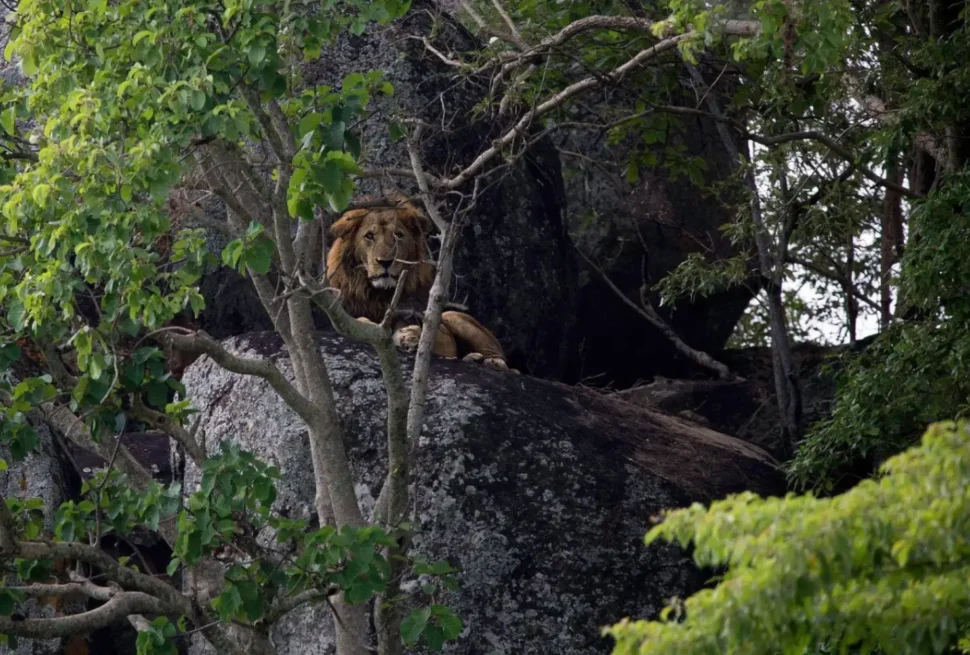
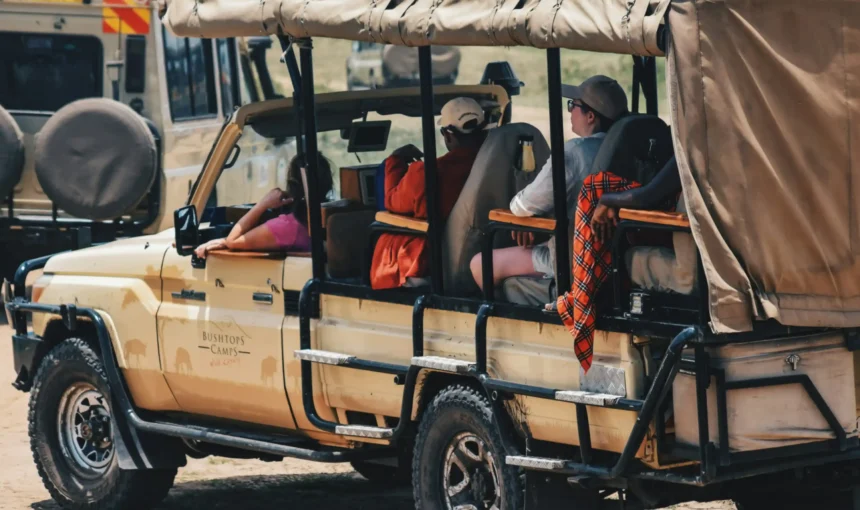
Spend the day on game drives in the Maasai Mara ecosystem. The reserve and adjoining conservancies are known for lion, elephant, buffalo, cheetah, hyena, giraffe, zebra, and seasonal wildebeest movement. Sightings vary by month, weather, grass height, and local movement.
Accommodation options:
- Value or midrange tented camp outside the reserve
- Midrange camp inside the reserve
- Luxury camp in a private conservancy
- High-end mobile or small exclusive camp
Private conservancies can offer lower vehicle density and activities such as night drives or guided walks where permitted. The national reserve gives strong access to classic Mara plains and river areas.
Day 7 Second full day in the Maasai Mara
A second full day is the minimum I recommend for the Mara on a four-country East Africa safari. One night is too rushed after the effort of reaching the reserve.
If visiting during the migration season, river crossing areas may be busy and crossings are never guaranteed. The wildebeest move according to rain and grazing, not fixed dates.
Where an extra night is worthwhile: Add one more night in the Mara if big cats, photography, or the migration are top priorities.
Day 8 Cross from Kenya to Tanzania and enter the Serengeti
This is the most demanding travel day of the itinerary. The most direct safari routing uses the western Kenya and northern Tanzania corridor, with a border crossing around Isebania and Sirari. Depending on the operator, season, and flight availability, guests may fly from the Mara to an airstrip such as Migori, transfer by road through immigration, then continue from Tarime or another nearby airstrip into the Serengeti.
Some itineraries instead return to Nairobi, fly to Kilimanjaro or Arusha, and then fly into the Serengeti. That can be cleaner for luggage and flight reliability, but it may cost more time.
Suggested overnight stop: Central, Western, Northern, or Southern Serengeti, depending on season
Border procedure: Exit Kenya, enter Tanzania, complete immigration and visa checks, then continue with a Tanzania-licensed vehicle or aircraft.
Planner’s note: Do not plan major game viewing expectations on this day. Treat it as a transfer day with some safari time if routing allows.
Day 9 Full day in Serengeti National Park
Spend a full day in Serengeti National Park. The best base depends on the time of year.
The Serengeti is huge, and choosing the wrong area can add long drives. Central Serengeti is the most flexible year-round base. Northern Serengeti is preferred when the migration is near the Mara River. Southern Serengeti and Ndutu are better during the calving season, usually early in the year, though exact movement follows rainfall.
Good overnight areas by season:
- December to March: Southern Serengeti and Ndutu area
- April to June: Central and western movement, depending on rains
- July to October: Northern Serengeti and Mara River area
- November: Movement varies as short rains begin
Day 10 Second full day in the Serengeti
A second Serengeti day gives the itinerary breathing room. It also allows time to focus on a specific area instead of chasing long-distance sightings.
For a gorilla trekking and Great Migration safari, this day is one of the most important in the whole trip. The route should be built around where the herds are most likely to be during the travel month, using recent guide reports while still accepting that wildlife movement cannot be guaranteed.
Day 11 Drive or fly toward Ngorongoro and overnight in Karatu or on the crater rim
Leave the Serengeti for the Ngorongoro area. If traveling by road, the route passes through the Ngorongoro Conservation Area. If flying, use an airstrip and continue by road from the nearest arrival point.
Suggested overnight stop: Karatu or Ngorongoro crater rim
Accommodation options: farm lodge, midrange lodge, luxury crater-rim lodge
Planner’s note: Karatu often gives better value. Crater-rim lodges save time but cost more.
Day 12 Ngorongoro Crater visit and continue to Arusha
Start early for the Ngorongoro Crater, one of the most wildlife-dense areas in northern Tanzania. The crater has regulated access, park fees, conservation fees, and vehicle rules that should be checked through official Ngorongoro sources before travel.
After the crater visit, continue to Arusha for the night.
Suggested overnight stop: Arusha
Travel note: This is a full day with a mix of wildlife viewing and road transfer.
Day 13 Add Tarangire, rest in Arusha, or build in a buffer day
This day is the pressure valve. Use it well.
The best options are:
- Tarangire National Park day trip or overnight Best in the dry season when elephants and other wildlife gather around the Tarangire River.
- Arusha rest day Better for travelers who dislike constant movement.
- Flight buffer Useful if the Mara to Serengeti transfer schedule is tight or during rainy seasons.
For many travelers, this day makes the difference between a strong East Africa multi-country safari and an exhausting one.
Day 14 Depart from Kilimanjaro International Airport
Depart from Kilimanjaro International Airport, or add a flight to Zanzibar if extending the trip. If the international departure is early, overnight near Kilimanjaro rather than in Arusha.
Suggested airport: Kilimanjaro International Airport
Best extension: Zanzibar, if beach time is needed after a busy safari
Visa and entry requirements for Uganda, Rwanda, Kenya, and Tanzania
The East Africa Tourist Visa is often the best option when it fits the route. It covers eligible tourism travel between Uganda, Rwanda, and Kenya on a single visa, usually for multiple entries within the validity period. It does not include Tanzania.
Tanzania requires its own entry approval or visa process through Tanzania Immigration. Requirements vary by nationality. Some travelers can apply online, while others may have different procedures.
Kenya also uses an electronic travel authorization system for many visitors, but travelers using the East Africa Tourist Visa should check how the two systems apply to their nationality and itinerary.
Official sources to check before payment:
- Uganda Directorate of Citizenship and Immigration Control
- Rwanda Directorate General of Immigration and Emigration
- Kenya eTA official portal
- Tanzania Immigration Department
- Airline transit and document rules
Carry printed and digital copies of approvals. Border systems work most of the time, but printed documents can help when internet or database access is slow.
Gorilla permits, park fees, and safari costs
Gorilla permits are date-specific and limited. Uganda permits are issued through Uganda Wildlife Authority, while Rwanda permits are issued through Rwanda Development Board. Rwanda’s permit price has historically been higher than Uganda’s, which is one reason many four-country itineraries trek in Uganda and overnight in Kigali afterward.
Park and conservation fees in Kenya and Tanzania change, and some areas have seasonal rates. Maasai Mara fees vary by management area and travel period. Serengeti and Ngorongoro fees include several components, such as park access, conservation charges, vehicle fees, concession fees, and taxes. Always ask for an itemized quote.
Budget categories for this route:
| Safari style | What to expect |
| Value guided safari | Simple lodges, more road time, fewer internal flights, limited availability for this four-country route |
| Midrange safari | Comfortable lodges and camps, selected regional flights, private transfers, good balance of cost and comfort |
| Luxury safari | Premium camps, better air access, private guiding where available, smoother logistics |
| High-end specialist safari | Top camps, private vehicles, prime conservancies, charter flights where useful |
A true four-country route is rarely a low-budget safari because regional flights, multiple park systems, and cross-border logistics add cost.
When to travel for gorillas and the Great Migration
Gorilla trekking runs year-round. The drier months, often June to September and December to February, can make trails easier, though forest rain is possible in any month.
For the Great Migration, the key point is movement. The herds do not follow a fixed calendar.
General migration planning guide:
- January to March Southern Serengeti and Ndutu are strong for calving season.
- April to May Long rains can affect road conditions, but prices may be lower.
- June to July Herds often move through western and central areas, with river crossings possible later.
- August to October Northern Serengeti and the Maasai Mara often become the focus.
- November to December Short rains influence the return south, but timing varies.
If the migration is the main reason for travel, the Serengeti lodge location should be chosen before the rest of the Tanzania plan is finalized.
When to drop a destination
A four-country East Africa safari is rewarding, but it is not right for every traveler. Drop one destination if:
- The budget does not allow regional flights.
- Travel dates leave no flexibility around gorilla permits.
- A group includes young children, limited mobility, or travelers who dislike early starts.
- The trip falls in a season when transfers may be less reliable.
- The main goal is photography in fewer places with more time in the field.
The easiest destination to drop is Rwanda if it is only being used for transit. In that case, trek in Uganda and fly back from Entebbe to Nairobi. Another option is to drop Uganda and trek in Rwanda, then fly Kigali to Nairobi. This costs more for the permit but saves some ground time.
If the priority is migration, consider a Kenya and Tanzania wildlife safari with no gorillas. If primates are the priority, build an Uganda and Rwanda gorilla trekking safari with chimpanzees and add only one savannah country.
Nturo Safaris internal-link suggestions
Use these internal links to support this guide on the Nturo Safaris website:
- Uganda gorilla trekking safaris
- Rwanda gorilla trekking tours
- Kenya Maasai Mara safari packages
- Tanzania Serengeti safari packages
- East Africa safari packages
- Great Migration safari planning guide
- Uganda, Kenya, and Tanzania safari itinerary
- East Africa guided safari tour
Frequently asked questions
Is 14 days enough for Uganda, Rwanda, Kenya, and Tanzania?
Yes, but only with careful routing and some regional flights. A road-only four-country safari in 14 days is usually too tiring. The best plan limits one-night stays and uses Kigali, Nairobi, and Kilimanjaro or Arusha as key air gateways.
Should I trek gorillas in Uganda or Rwanda?
Uganda is usually better for value, while Rwanda is often better for shorter road transfers if starting and ending in Kigali. For this specific circuit, Uganda trekking followed by a road transfer to Kigali works well.
Can I use one visa for all four countries?
No. The East Africa Tourist Visa covers eligible travel to Uganda, Rwanda, and Kenya. Tanzania is separate and has its own entry requirements.
Can I fly directly from the Maasai Mara to the Serengeti?
Some safari routings connect the Mara and Serengeti through western Kenya and northern Tanzania using airstrips, road transfers, and the Isebania or Sirari border area. Schedules vary by season and operator, so this must be confirmed before booking.
Where should I stay for the Great Migration?
It depends on the month. Southern Serengeti and Ndutu are better early in the year, northern Serengeti and the Mara are better in many July to October plans, and central Serengeti is the most flexible year-round base.
Is this itinerary suitable for families?
It can work for families with older children who can handle early starts and transfers. Gorilla trekking has minimum age rules set by the wildlife authorities, so families with younger children need a different plan.
What is the biggest planning mistake?
Trying to include too many parks in each country. This itinerary already covers a lot. Adding Queen Elizabeth, Volcanoes National Park, Amboseli, Lake Nakuru, Tarangire, and Zanzibar inside the same 14 days will make the trip rushed.
How far ahead should gorilla permits be booked?
Book as early as possible, especially for peak travel months. Gorilla permits are limited by date and trekking sector, and the permit should guide the lodge choice.
Final planning advice
The best East Africa safari circuit is not the one with the longest list of parks. It is the one that protects time in the right places. For most travelers, that means one gorilla trekking base, two full days in the Maasai Mara, two full days in the Serengeti, and a sensible Tanzania finish through Ngorongoro and Arusha.
A four-country East Africa wildlife safari can work well in 14 days, but it needs honest planning. Use flights where they save real time, confirm visas and permits through official sources, match lodges to the season, and keep one buffer day in the plan. That is how a 14-day Uganda Rwanda Kenya Tanzania tour becomes a smooth safari rather than a race across the map.