Gorilla trekking in DRC vs Uganda can look similar on a map, but it is very different on the ground. The two countries share the same wider Albertine Rift region, and both are linked to mountain gorilla conservation. The planning experience, safety checks, permit systems, border logistics, and backup options are not the same.
The main decision is not only “Which forest has gorillas?” It is “Which destination is officially open, safe to access, properly permitted, and realistic for my dates?” That question matters most for Virunga National Park in eastern Democratic Republic of Congo, where conditions can change and official access must be verified before any trip is sold or booked.
Uganda is usually the more straightforward choice for travelers who want a stable gorilla trekking plan. Bwindi Impenetrable National Park and Mgahinga Gorilla National Park are managed by the Uganda Wildlife Authority, with published permit procedures, a wide lodge network, and several route options from Entebbe, Kampala, Kigali, or other safari regions.
This guide compares DRC vs Uganda gorilla trekking from a practical safari-planning point of view, with a safety-first approach.
Quick comparison of DRC and Uganda gorilla trekking
| Planning factor | DRC gorilla trekking | Uganda gorilla trekking |
| Main mountain gorilla area | Virunga National Park | Bwindi Impenetrable National Park and Mgahinga Gorilla National Park |
| Access status | Must be checked directly with Virunga National Park and official security advisories before planning | Regularly operated through Uganda Wildlife Authority, subject to permit availability and park rules |
| Security planning | More complex due to changing conditions in eastern DRC | More predictable for most itineraries, with standard safari risk management |
| Permit system | Confirm through Virunga’s official channels when the park is operating | Book through Uganda Wildlife Authority or a licensed tour operator |
| Typical trip style | Often shorter and more controlled when open | Flexible, with fly-in, private road safari, and Rwanda-Uganda combinations |
| Border logistics | Can involve Rwanda-DRC crossing procedures and stricter movement controls | Can route from Entebbe, Kampala, Kigali, Queen Elizabeth, Lake Bunyonyi, or Murchison Falls |
| Accommodation | More limited and dependent on operating status | Broad range from budget lodges to high-end forest camps |
| Best fit | Experienced travelers only when official access and security conditions allow | Most first-time gorilla trekkers and travelers needing a reliable alternative |
Where gorilla trekking happens in the DRC and Uganda
Virunga National Park gorilla trekking in DRC
Virunga National Park is one of Africa’s best-known conservation areas and part of the Virunga Massif, a volcanic region shared by DRC, Rwanda, and Uganda. It has a long conservation history and is associated with mountain gorillas, active volcanoes, and high-altitude forest.
For Virunga National Park gorilla trekking, the key point is access. Eastern DRC has experienced serious security incidents over the years, and park operations can be suspended or changed. No traveler should rely on old blog posts, outdated itineraries, or second-hand claims that trekking is available.
Before treating Virunga as bookable, verify:
- The official Virunga National Park website and booking channels
- Current travel advisories from your government
- DRC border and visa requirements from official immigration sources
- The position of a trusted local operator with current ground contacts
- Insurance coverage for travel to eastern DRC
If any of these checks raise concern, do not force the itinerary. Uganda is the more practical alternative.
Bwindi gorilla trekking in Uganda
Bwindi gorilla trekking takes place in Bwindi Impenetrable National Park, a large montane forest in southwestern Uganda. The park has several trekking sectors, commonly including Buhoma, Ruhija, Rushaga, and Nkuringo. Each sector has its own trailheads and lodge areas, so permit location matters as much as the permit date.
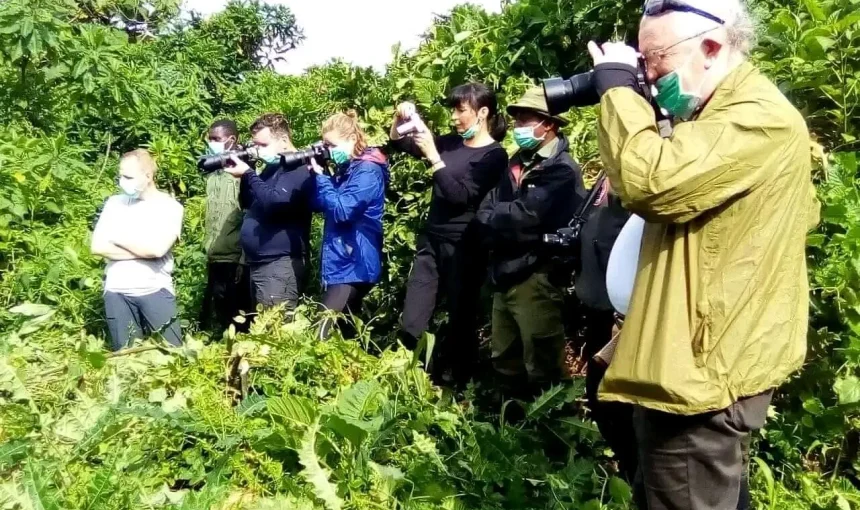
Bwindi is known for steep terrain, thick vegetation, and a large number of habituated gorilla families. Trekking times vary. Some groups may be reached in under two hours, while others require longer hiking. Rangers and trackers guide each trek, and visits to the gorillas are limited under official rules.
For many travelers comparing the differences between gorilla trekking in Uganda and DRC, Bwindi offers the widest choice of accommodation, routes, and add-on safaris.
Mgahinga gorilla trekking in Uganda
Mgahinga gorilla trekking happens in Mgahinga Gorilla National Park, Uganda’s part of the Virunga Massif. The park is smaller than Bwindi and sits near the borders with Rwanda and DRC. It is a good option for travelers combining gorillas with golden monkey tracking, volcano views, or a route through Kisoro.
Mgahinga usually has fewer gorilla permit slots than Bwindi, so availability can be tighter. Its location can work well for travelers entering Uganda from Rwanda through Cyanika or for those who prefer the Virunga landscape over Bwindi’s denser forest.
Safety and current access should come before price
The biggest difference in Uganda vs Congo gorilla trekking is security planning.
Uganda’s gorilla parks sit in a well-established safari circuit. Standard precautions still apply, including using licensed guides, avoiding night driving where possible, following park rules, and checking current travel advice. But in normal safari planning, Uganda gorilla trekking is a routine product with known permit procedures and daily park operations.
DRC is different. DRC gorilla trekking safety depends heavily on the current situation in and around Virunga National Park, nearby roads, border access points, and park management instructions. Security conditions in eastern DRC can change quickly, sometimes affecting park access and regional movement.
Treat DRC availability as a live operational question, not a fixed product. Confirm official park status and independent security advice before discussing dates, deposits, or routes.
Reliable sources to check include:
- Virunga National Park’s official website and verified communication channels
- Uganda Wildlife Authority for Uganda park operations and permit fees
- Your foreign ministry or state department travel advisory
- Official immigration websites for Uganda and DRC
- Airline and border-crossing updates for route feasibility
Nturo Safaris will never present a restricted or closed area as bookable. If Virunga access is uncertain, we will suggest Uganda as the responsible alternative for mountain gorilla trekking in Uganda.
Permit costs and booking procedures
Uganda gorilla trekking permits
Uganda gorilla trekking permits are issued by the Uganda Wildlife Authority. The official tariff should be checked before booking, especially because fees can change by financial year or visitor category.
As published in recent Uganda Wildlife Authority tariffs, Uganda gorilla permit fees have commonly been listed by category, including foreign non-residents, foreign residents, and East African citizens. For current planning, verify the latest UWA tariff directly or through a licensed operator before quoting a final figure.
The practical booking process is:
- Choose travel dates and preferred trekking area.
- Check permit availability for Bwindi or Mgahinga.
- Match lodging to the permit sector.
- Pay for permits within the required booking window.
- Receive permit confirmation and keep passport details consistent.
Uganda permits are date-specific and sector-specific. A Rushaga permit does not place a traveler in Buhoma. This affects driving time, lodge choice, and the previous night’s accommodation.
DRC gorilla trekking cost and permits
The DRC gorilla trekking cost has historically been lower than Uganda and Rwanda when Virunga has been operating, and most often, DRC permits are at a lower rate.
For Democratic Republic of Congo gorilla trekking, confirm permit pricing only through Virunga National Park’s official booking system or verified partners like Nturo Safaris when the park is open to visitors. If the park is not officially receiving tourists, the permit cost is not the main issue. Access and traveler safety come first.
A fair DRC vs Uganda gorilla trekking cost comparison should include more than the permit:
- Permit fee
- Visa fees
- Border transfer costs
- Security-related transport requirements
- Required park packages or fixed services, if applicable
- Accommodation availability
- Insurance limitations
- Possible rerouting costs if conditions change
A cheaper permit does not always mean a cheaper safari.
Transport, borders, and route planning
Uganda has several workable routes.
From Entebbe or Kampala, travelers can drive to Bwindi or Mgahinga in a full-day road transfer, often broken up with a night near Lake Mburo, Lake Bunyonyi, or Queen Elizabeth National Park. Domestic flights can also shorten travel time by connecting Entebbe with airstrips in western Uganda, followed by road transfers to the lodge.
From Rwanda, travelers can enter southwestern Uganda through established border posts such as Cyanika or Katuna, subject to current immigration rules. This route can reduce driving time to Mgahinga, Rushaga, or Nkuringo compared with starting in Entebbe.
For DRC, many Virunga itineraries, when operating, have traditionally depended on access through Rwanda into Goma or other controlled arrangements. Border procedures, visa rules, and park transfer conditions must be confirmed close to travel. Travelers should not assume they can independently cross and continue to Virunga without current authorization.
For gorilla trekking logistics in Uganda and eastern DRC, Uganda offers more fallback options. If one Bwindi sector has no permits, another may still have space. If road conditions affect one route, a planner can often adjust. If DRC access is restricted, there may be no safe workaround.
Accommodation and safari budgets
Uganda has a stronger lodge network around gorilla trekking areas. Bwindi offers budget guesthouses, mid-range lodges, and high-end forest camps across its main sectors. Mgahinga and Kisoro also have a range of practical options, though inventory is smaller.
This makes Uganda gorilla safari packages easier to tailor. A budget-conscious trip may use simple lodges and road transfers. A higher-end trip may include fly-in transfers, private guiding, and premium forest lodges.
For Uganda gorilla trekking cost, budget for:
- Gorilla permit
- Accommodation near the correct trekking sector
- Private or shared transport
- Driver-guide fees
- Park transfers and fuel
- Meals and drinking water
- Tips for guides, rangers, trackers, and lodge staff
- Optional activities such as golden monkey tracking or Batwa cultural visits
In DRC, accommodation options around Virunga depend on official park operations and access rules. When the park is not clearly open and secure, do not plan around lodge names or historical packages. Confirm what is operating now, what transfers are allowed, and what happens if the park changes access before arrival.
Trekking conditions and fitness
Bwindi can be physically demanding. Trails may be muddy, steep, and slippery, especially after rain. The forest vegetation is thick, and a trek can include uneven ground, roots, and short climbs. Porters are strongly recommended, both for support and for local income.
Mgahinga has a different feel, with volcanic slopes and more open bamboo zones in some areas. Hiking can still be strenuous because of altitude and gradient.
Virunga trekking conditions can also involve high-altitude forest and volcanic terrain. The physical side is only one part of the assessment. For DRC, the route to the park, current security environment, and official escort procedures may be more important than trail difficulty.
For all gorilla treks:
- Wear broken-in hiking boots.
- Carry rain gear in any season.
- Use gardening-style gloves for gripping vegetation.
- Bring water and a packed snack.
- Follow the ranger’s distance and health rules.
- Do not trek if you have symptoms of a contagious illness.
Mountain gorillas are vulnerable to human-transmitted disease, so health rules are conservation rules, not formalities.
Travel documents and entry requirements
For Uganda, many travelers need an eVisa or an East Africa Tourist Visa, depending on nationality and itinerary. Entry rules can change, so check Uganda’s official immigration website before travel. Passports generally need sufficient validity and blank pages, and yellow fever vaccination proof may be required under health regulations.
For DRC, visa procedures can be more complex and may depend on nationality, entry point, and purpose of travel. If Virunga is operating, park-linked visa support may or may not be available under current rules. Confirm through official DRC immigration channels and the park before booking flights.
Gorilla trekking travel requirements also include practical documents:
- Passport matching the permit booking
- Travel insurance covering the destination and activity
- Emergency contact details
- Confirmed park permit
- Lodge and transfer confirmations
- Proof of required vaccinations or health documents, if applicable
Insurance deserves special attention for DRC. Some policies exclude regions under strong government travel warnings. Read the exclusions before paying deposits.
When Uganda is the better alternative to DRC
Uganda is often the best alternative to DRC gorilla trekking when Virunga access is restricted, unclear, or not suitable for a traveler’s risk tolerance.
Choose Uganda when:
- You need a reliable gorilla permit system.
- You want more accommodation choices.
- You are planning a family or multi-generation safari.
- You want to combine gorillas with savannah parks.
- You prefer fewer border complications.
- Your insurance excludes parts of eastern DRC.
- Official advisories warn against travel to the DRC route you would need.
Choose DRC only when current official sources confirm that the relevant area is open, access is approved, your insurance is valid, and the security situation is acceptable. Even then, build flexibility into the itinerary.
For most travelers asking, “Should I choose Uganda or Congo for gorilla trekking?” the planning answer is simple: choose Uganda if you want the most dependable route to mountain gorillas. Consider DRC only with fresh official confirmation and expert ground handling which Nturo Safaris excels at.
FAQs
Is gorilla trekking in Virunga National Park open?
Do not rely on old information. Check Virunga National Park’s official website, verified park communication channels, and your government’s travel advisory before planning. If official access is restricted or unclear, do not book it.
Is Uganda safer than DRC for gorilla trekking?
Uganda is generally more predictable for gorilla trekking logistics because Bwindi and Mgahinga operate within an established safari circuit. DRC gorilla trekking safety depends on current conditions in eastern DRC, which can change quickly. Always check official advisories.
How much does gorilla trekking cost in Uganda?
The largest fixed cost is the gorilla permit issued by the Uganda Wildlife Authority. The full safari cost also includes lodging, transport, guiding, meals, and optional activities. Check the latest UWA tariff before quoting a final permit fee.
Can I combine Uganda gorilla trekking with Rwanda?
Yes. Many travelers enter Uganda from Rwanda through southwestern border posts, especially for Mgahinga, Rushaga, or Nkuringo. Border rules and visa requirements must be confirmed before travel.
Which is better, Bwindi or Mgahinga?
Bwindi has more trekking sectors, more permits, and a wider lodge range. Mgahinga is smaller and works well for travelers who like the Virunga setting or want to add golden monkey tracking. The better choice depends on permit availability, route, and travel style.
Why is DRC often cheaper for gorilla trekking?
DRC permits have often been quoted lower than Uganda or Rwanda in past operating periods. But total cost can rise once visas, controlled transfers, security logistics, limited accommodation, and rerouting risk are included.
What happens if DRC access changes before my trip?
A responsible operator should not send travelers into unsafe or restricted areas. If Virunga access changes, the practical alternative is usually to reroute to Uganda’s Bwindi or Mgahinga, subject to permit availability.
When should I book Uganda gorilla trekking permits?
Book as early as possible for peak travel months, especially if you need specific dates or lodge standards. Permit availability controls the itinerary, so confirm permits before locking in the rest of the safari.
The practical takeaway
The choice between DRC gorilla trekking vs Uganda is not just a price comparison. It is a risk, access, and logistics decision.
Virunga National Park has major conservation importance, but it should only be considered when official park operations, security advisories, visas, transfers, and insurance all support travel. Uganda’s Bwindi and Mgahinga offer a more consistent planning framework, with official Uganda gorilla trekking permits, a broader lodge network, and flexible safari routes.
For travelers who want the safest and most reliable path to seeing mountain gorillas, Uganda is usually the stronger plan. For DRC, verify first, confirm again, and never let a low permit price override current safety information.